
Gesher Benot Ya‘aqov
INTRODUCTION
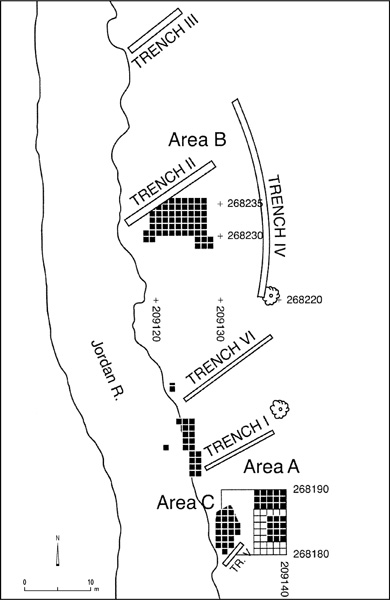
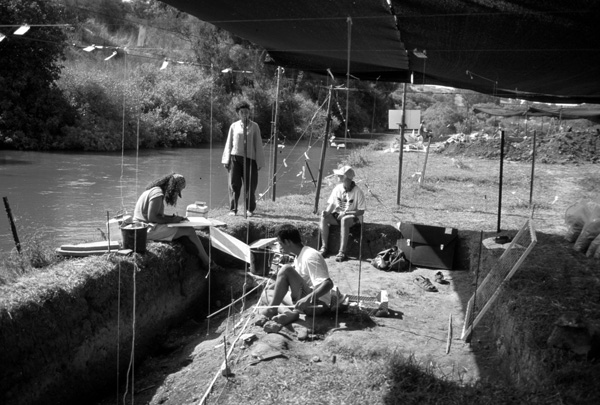
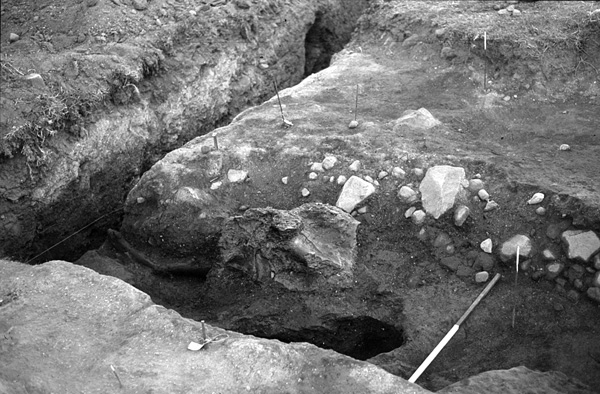
Between 1989 and 1997, seven field seasons were directed by N. Goren-Inbar of the Hebrew University of Jerusalem at Gesher Benot Ya‘aqov to facilitate recognition of the stratigraphic sequence. The sections, representing a 34 m-thick stratigraphic sequence, revealed that the geological structure is tilted up to 45 degrees at the study area. Excavations adjacent to the trenches (in three major areas: A, B, C) exposed over 13 Acheulian archaeological horizons comprising a wealth of botanical and paleontological assemblages. The lithic assemblages retrieved reflect the typical Acheulian tool kit: hand axes, cleavers, flake tools, flakes, and cores.
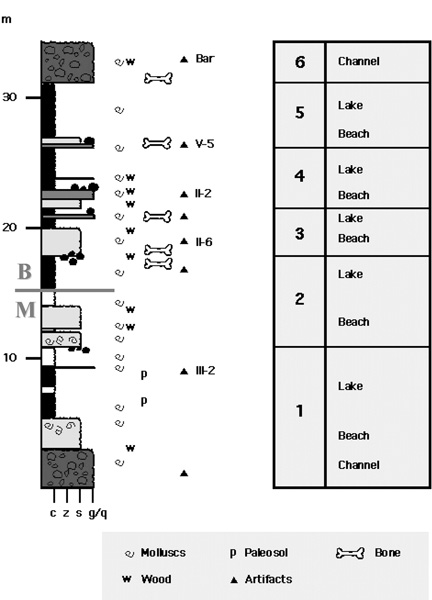
A paleomagnetic study located the Matuyama/Brunhes chronological boundary (790,000 years ago) in the lower third sector of the sequence, thus assigning a greater antiquity to the formation than had previously been assumed. The estimated duration of the entire depositional sequence at the study area is c. 100,000 years, assigning it to Oxygen Isotope Stage 18–20, thus making Gesher Benot Ya‘aqov one of the most unique terrestrial sequences known from this time range.
The site has been greatly influenced by the water regime of the paleo-Lake
EXCAVATION RESULTS
THE PALEOBOTANICAL EVIDENCE. Rich botanical assemblages retrieved from the excavations include wood, bark, fruits, and seeds. Within the wood finds, 27 genera of trees, shrubs, and woody climbers were identified and are the primary data set for a basic understanding of the paleobotany of the Dead Sea Rift zone and its adjacent areas. The set also indicates that this assemblage was not affected by the continued presence, during hundreds of thousands of years, of hunter-gatherer groups that populated these parts of the eastern Mediterranean region.
In addition, over 130 taxa of fruits and seeds were identified, forming the most extensive botanical database of the Levantine Lower Paleolithic. An important aspect of the botanical finds is the edible component of these assemblages. An example is the 7 species of edible nuts: five extant terrestrial nuts and two extinct aquatic nuts that were found associated archaeologically with pitted hammers and anvils. Another botanical aspect of the site is a single worked wood item—a man-made polished wooden plank of a willow tree (Salix) (25 by 13.5 by 4 cm), the earliest known item of its kind in the world.
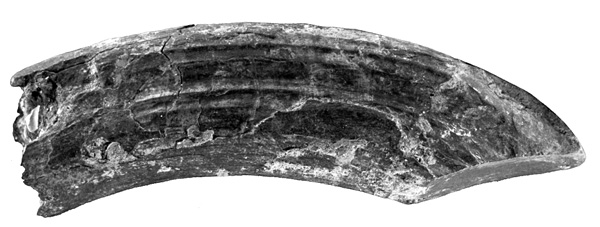
THE PALEONTOLOGICAL EVIDENCE. Extensive paleontological assemblages were recovered and include mammals (elephants, rhinos, cervids, bovids, hippos, and equids) and micro mammals. Also found are birds, fish, crabs, and an especially large collection of molluscs. Many of the species identified are important paleontological landmarks from both the perspective of biogeographical aspects and chrono-evolutionary significance.
THE LITHIC ASSEMBLAGES. The bifaces (hand axes and cleavers) of Gesher Benot Ya‘aqov have been found in all archaeological horizons excavated at the site. The most characteristic tool type of the Acheulian material culture, they are mainly made on basalt flakes whose width generally exceeds their length. These flakes have pronounced, frequently thinned bulbs of percussion and striking platforms, and their axes of symmetry are either oblique or perpendicular to the axes of blow. The technological properties are observable due to the fact that later modification by retouch has been minimal and did not mask the earlier technological features. A detailed study demonstrates that the bifaces have been modified on flakes produced by several different techniques. It seems that hand axes and cleavers cannot be distinguished from one another on the basis of their size or shape properties. Raw material for the manufacture of these tools was probably procured from the site’s immediate vicinity, as inferred from the presence of several basalt giant cores within the finds retrieved from layer II-6. All these cores show large flake scars and some clearly display features indicative of the prepared core technique. The initial stage of biface manufacture consisted of producing large flakes of lenticular cross-section and a thin distal working edge. The second stage was flake modification, which consisted of the removal of extra thickness as well as minimal edge treatment. This reduction process is unique in terms of its uniformity and the homogeneity of the end products, which attest to a considerable degree of standardization.
The study of the Gesher Benot Ya‘aqov hominins’ technological abilities also resulted in the discovery of the earliest recorded Levantine use of soft percussion mode. The evidence is observable on both the basalt and flint artifacts. Excavations in area C resulted in rich flint assemblages (particularly of layers V-5 and V-6) exhibiting this technique.
PATTERNS OF HOMININ BEHAVIOR. The behavioral pattern that emerges is a varied one, expressed by patterns of raw material exploitation, high functional diversity of the archaeological horizons, and exploitation of the Mediterranean flora and fauna in the vicinity of the site—a unique ecological niche of high potential and great diversity. Hominins had the cognitive abilities that enabled foresight (multi-stage planning) followed by realization of their plans. A specific knowledge of the animals’ anatomy can be deduced from the location of cut marks and other types of bone damage and fractures caused by exploitation for marrow extraction and consumption.
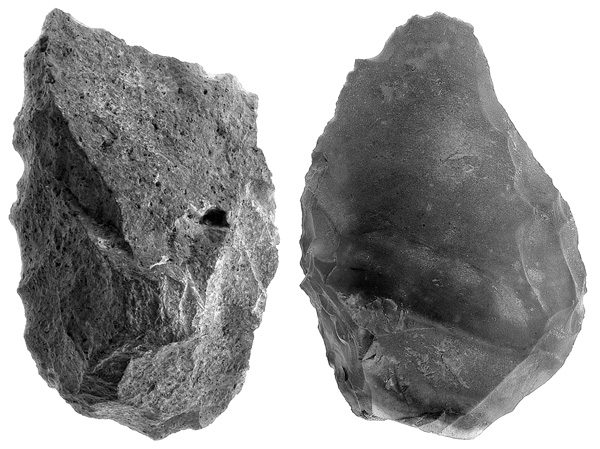
Analysis of the lithic assemblages shed light on the complexity of behavioral patterns in the production of bifacial tools. It seems that different modes of activity took place: some bifaces were brought as preforms to the site, others were introduced as finished objects, and in some cases the entire reduction sequence took place in situ. Of particular importance are the latest discoveries, which demonstrate the presence of controlled fire in the archaeological horizons, the earliest record in Eurasia. Evidence comes from burned flint microartifacts and burned wood. The mastery of fire is of significance for diet and protection. It offered outstanding opportunities and indicates an evolutionary advance unknown elsewhere in Eurasia.
NAAMA GOREN-INBAR
INTRODUCTION
Between 1989 and 1997, seven field seasons were directed by N. Goren-Inbar of the Hebrew University of Jerusalem at Gesher Benot Ya‘aqov to facilitate recognition of the stratigraphic sequence. The sections, representing a 34 m-thick stratigraphic sequence, revealed that the geological structure is tilted up to 45 degrees at the study area. Excavations adjacent to the trenches (in three major areas: A, B, C) exposed over 13 Acheulian archaeological horizons comprising a wealth of botanical and paleontological assemblages. The lithic assemblages retrieved reflect the typical Acheulian tool kit: hand axes, cleavers, flake tools, flakes, and cores.
A paleomagnetic study located the Matuyama/Brunhes chronological boundary (790,000 years ago) in the lower third sector of the sequence, thus assigning a greater antiquity to the formation than had previously been assumed. The estimated duration of the entire depositional sequence at the study area is c. 100,000 years, assigning it to Oxygen Isotope Stage 18–20, thus making Gesher Benot Ya‘aqov one of the most unique terrestrial sequences known from this time range.