
Archaeological Views: Walking Roads


The evidence for Roman-period roads in Judea-Palestine is abundant. Imperial roads were constructed using the same methods as elsewhere—with milestones at fixed distances. These milestones bear inscriptions that list the builder’s name and the distance and destinations of the road. During the second and third centuries C.E., Roman engineers built many new roads all over the country. This road system allowed supplies to be moved between the main urban areas and army centers.
But in our study of these roads, we noticed something else: At the pass of Beit Horon, northwest of Jerusalem, we first noticed a few curved steps, about 5.5 feet wide, alongside the Roman imperial road, the latter more than double the width of the steps. Both led toward Jerusalem. We assume that the curved steps were constructed first for walking, and only later a paved road was constructed beside them. The paved road had a low incline and a serpentine design, suitable for animal-drawn wagons.


The Jewish historian Josephus called the traditional pilgrim road to Jerusalem up the Beit Horon ascent a “public road” (Greek: Demosia hodos),1 or “[the road] that bears the people” (Greek: Leophoros).2 This road was no doubt used by Jewish pilgrims on their way to the Temple in Jerusalem before its destruction by the Romans in 70 C.E.
The edict to “appear before the Lord” in the Jerusalem Temple during the three festivals of Sukkot (Tents or Booths), Pesach (Passover) and Shavuot (Weeks) is found in Exodus 34:22–23 and Deuteronomy 16:16. The Book of Nehemiah and rabbinic literature mention additional occasions to make pilgrimages to Jerusalem—to bring wood offerings to the Temple and to assure that the priestly divisions would ascend to officiate in the Temple.3
During the First Temple period and the time of Ezra and Nehemiah, Jewish settlements were located in the mountains from Gophna to Hebron, as well as in the region of Jericho. In the Second Temple period, Jewish settlement spread to the Judean lowlands, the Galilee, Transjordan, the Babylonian diaspora, Antioch, Egypt and other countries in the Mediterranean basin.
Ancient literary sources also describe crowds of pilgrims walking to Jerusalem, adorned in their finery, singing and playing musical instruments, carrying babies in their arms and bringing birds and animals for sacrifice in the Temple.
Some ancient passages describe the large numbers of Jewish pilgrims who would gather in Jerusalem from all over the country on the three main pilgrimage (Shalosh Regalim) festivals—Sukkot,4 Shavuot5 and Pesach.6 In our research, a great deal of evidence from archaeologists, surveyors and travelers testifies to an extensive multi-branched walking-road network—with curved, steep, rock-hewn ascents. In our opinion, these rock-cut steps were created for pilgrims walking to Jerusalem.
In the Second Temple period, stone vessels were valued because they were not subject to ritual impurity under Jewish law. In our opinion, the stone steps in these pilgrimage roads should be seen in this context: In many cases, the steps were cut as part of the preparation of “pure roads” so that the priests and the people could avoid impurity on their way to the Temple in Jerusalem.
Archaeological Views: Alternate Altars

Many modern readers tend to skim or outright skip the Torah’s long sections of law concerning ritual sacrifice. Their apathy is understandable. After the destruction of the Second Temple in 70 C.E., the focal point of ancient Judaism shifted from ritual sacrifice to the study of the Torah, and the era of the Talmud allowed Judaism to adapt and survive without the centerpiece of worship and sacrifice in Jerusalem. But with the rise of modern critical Biblical study and the excavation of religious centers, such as Tel Dan in northern Israel, a renewed interest in the sacrificial laws and what they reveal about ancient Israelite religion has developed. At the forefront of this renewed interest are altars and how the remains from the ground match the descriptions found in the Bible.
A number of Iron Age temples and religious spaces that functioned at the time of the First Temple have been excavated. This seems contrary to the Bible’s requirement of centralized worship and sacrifice only at the Jerusalem Temple (see, e.g., Deuteronomy 12:2–27), but we should remember that the Bible’s laws present the ideal practices of ancient Israelite religion. Actual practice may have been very different. At Tel Dan in northern Israel, excavators found evidence of a very large sacrificial altar made of carved stones with four “horns” protruding from the four corners on top of the altar. These “horns” appear to be a decorative motif unique to altars from David’s time until the Babylonian Exile. The northern cities of Gezer, Shiloh, Shechem, Dothan, Kedesh and Megiddo have all revealed smaller carved-stone altars, most of which have four horns.
Archaeologists have long noted the connection between these Iron Age four-horned carved-stone altars and the description of the Tabernacle’s four-horned altar in Exodus 27:1–8, as well as references to the four-horned altar at the First Temple in the Books of Kings and Chronicles.
At Beer-Sheva, Israeli archaeologist Yohanan Aharoni found three large carved stones that appeared to be the three corners of a massive four-horned altar. The excavators reconstructed this sacrificial altar and theorized that it was dismantled during the religious reforms of King Hezekiah in the late eighth century B.C.E. (2 Kings 18). This reconstructed altar now sits at the entrance to the archaeology wing of the Israel Museum. However, the carved stones were found inside a later wall, which obscures their original place, function and date.
Aharoni’s team also excavated the most well known Iron Age temple in Judah outside of Jerusalem itself: the Arad temple. In the Negev south of Jerusalem, Arad contained a very different sacrificial altar than what archaeologists have reconstructed at Dan and Beer-Sheva. The central sacrificial altar at Arad was made of uncut field stones and packed earth. This is the other type of altar described in the Bible: “the earthen altar” (Exodus 20:24–26 and Deuteronomy 27:1–8). The Bible states that this kind of sacrificial altar should be made of uncut fieldstones and dirt. The laws in Deuteronomy specifically bar any contact between the altar and iron implements. When compared to the four-horned altar, these altars are a simple construction. The Arad temple also contained two carved-stone incense altars without horns. Most smaller-sized altars are probably incense altars.
Recently, archaeologists have found another Iron Age earthen altar in a sacred area at Tel Motza just outside of Jerusalem. This further illustrates the fact that ancient Judahites sacrificed at sites other than the First Temple itself—even near Jerusalem.
From the period after the Assyrian conquest and destruction of the northern Kingdom of Israel in 722 B.C.E., stone four-horned altars were found mostly in Philistia. Ekron, Ashkelon, Timnah and Yavneh all reveal carved-stone altars, most dated around the seventh century B.C.E. Former Director of the Albright Institute Seymour Gitin proposes that the four-horned altar was brought to Philistia by northern Israelites who were forced to resettle there after the Assyrian conquest. Regardless of the artistic origins of the Iron Age four-horned altar or the simple earthen altar, their descriptions in the Bible do match the archaeological remains. The altars uncovered in this archaeological context reveal religious differences between the northern and southern kingdoms in Israel (and Philistia). They also show us a point of tension between the sources of the Bible and their respective visions for ancient Israelite religious practices.
Neither Iron Age archaeology nor the texts of the Bible show an evolution from a crude earthen altar to a more ornate four-horned altar. Both forms existed at the same time by the deliberate choice of whatever priesthood controlled a temple or “High Place.” The Deuteronomistic History (the books of Joshua, Judges, 1-2 Samuel and 1-2 Kings) that modern critical scholars see as coming from the southern kingdom of Judah takes issue with the religious practices of the northern kingdom of Israel as well as some practices within Judah. The earthen altars may have been one of many points of friction between the views of the Deuteronomistic Historians and, on the other hand, Israelite religious practices. According to the Bible (i.e., Deuteronomistic Historians), worship centers in the north were controlled by non-Levite priests appointed by the northern king (1 Kings 12:31). Which altar is the “correct” one for ancient Israelites: the four-horned altar or the earthen altar? When it comes to the dynamic period of the Iron Age before the Babylonian exile, the answer might be both.
Archaeological Views: How Canaanites Worshiped

You never know. What led us to Tel Burna was the possibility of studying the borderland between Judah and the Philistines in the Iron Age. The site might even be Biblical Libnah (Joshua 21:13; 2 Kings 8:22; Isaiah 37:8; 2 Kings 24:17–18). When we surveyed the site, however, we discovered a large Late Bronze Age (1550–1200 B.C.E.) Canaanite settlement on the western slopes of the tell, just inches below the surface that featured a large public building with an adjacent courtyard. Here we uncovered some extraordinary finds that provided insights into the Canaanites and their religious world.
The overall plan of the building is still unclear. It had a large courtyard of approximately 52 square feet. The outside walls of the building were built of large field stones, and the floor was largely composed of exposed bedrock. The finds from the courtyard suggest that the building may have been a temple. They seem at least to indicate that religious activities took place in the courtyard.
Many animal bones and much pottery lay on the surface of the courtyard. Two complete tabuns (ovens) also suggest religious activity. This was confirmed by several chalices, goblets and cup-and-saucers. Apparently the ritual involved eating and drinking.
Inside the building we discovered nose fragments of two ceramic masks, which were apparently used for ceremonial purposes. Openings for the mouth and eyes can clearly be seen on the masks. The masks were obviously meant to be worn by a human, as they were sized and shaped to fit the human face instead of to adorn an idol.
Several figurines also were found in the building. One is a fragment of a Canaanite plaque with a figurine depicting a standing nude female figure holding two small infants, with the infants’ inner hands grasping the woman’s breasts. It is published here for the first time.

The head of a locally made horse figurine with incised facial features was also found in the building.
In the courtyard, many Cypriot imports were discovered, including various bull figurines. One piece of a Mycenaean bull figurine was decorated in the Late Helladic tradition.
Three unique Cypriot votive vessels found on top of a carved flat stone added to the indication that cult and ritual activities occurred here.
On the other hand, large Cypriot pithoi and seals suggest that economic and administrative activities also took place here. The integration of cultic and economic functions is not unusual, however.

The exact nature of the building (and its courtyard) continues to elude us. Perhaps further excavation will provide more clarity. The existing clues are certainly intriguing. Apparently some kind of cultic activity took place here. Perhaps the structure served as a temple, which also collected taxes, or was an administrative building with certain cultic affiliations. Some kind of ceremonial drinking (as evidenced by the goblets) and feasting (as evidenced by the animal bones) almost certainly occurred here. Perhaps a ceremonial procession ended here in the courtyard, as evidenced by the mask fragments made to fit a human face.

If you would like to help us solve the mysteries, please come help us dig—the new evidence will surely be illuminating.
Archaeological Views: In the Shadow of Solomon (and Everyone Else)


It was in the first season of our renewed excavations at Gezer—Steve was giving a tour to a group of visiting archaeologists, and we were standing at the Iron Age, six-chambered city gate—when he used the popular term “Solomonic Gate.” After the tour, Sam wondered if this term should be used. It was a good question: Were we being “scientific”? Would we be accused of digging with a trowel in one hand and a Bible in the other? More important, would we be giving the impression that we had preconceived ideas? After all, our interpretations should be scientifically based on excavation results, free from any historical or Biblical bias.
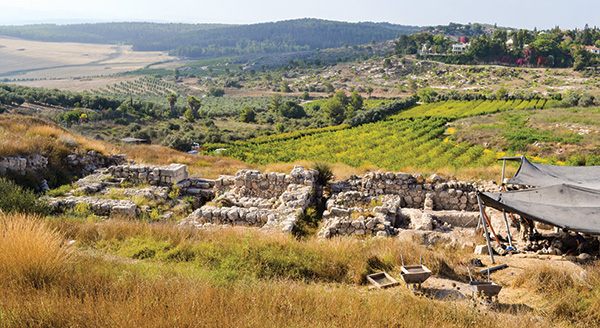
All this reminded Steve of a conversation he had with a hotel receptionist a couple of years before we set up grid stakes on site. He was looking for a place to house 75 students and staff and set up a dig house. So he was visiting hotels and kibbutzim, trying to negotiate the best price, given our budget. One option was Neve Shalom, a mixed community of Jews and Palestinians living together to demonstrate that peaceful coexistence is possible, but they were not keen on having our project on their grounds. The Israeli receptionist stated that she was against Israeli settlements in the West Bank and thus was hesitant to house a project that was going to “prove” that Israeli settlers had rights to the land. She wouldn’t believe we were not using our excavations to support any religious or political agenda; we were just seeking a place for our team members to sleep. In the end, we stayed at Neve Shalom, spending seven wonderful seasons there. They are happy to have us as guests, and we are overjoyed being there.
While we were still considering renewing excavations at Gezer, we invited Bill Dever to join us at the site for a discussion regarding strategy. Steve was a student of Bill’s at Arizona and was part of the University of Arizona team that had excavated the site in 1990; Sam was a volunteer during the 1972‒1973 Hebrew Union College (HUC) excavations. Naturally, Bill was excited, telling us where we should dig and sharing the questions that had been left unanswered by the HUC excavations. Bill is a legendary archaeologist—we respect him and his thoughts—but this was our project, and we had our own research agenda; different questions are being asked today than in the 1960s and 1970s.
Since our student days at Gezer, we have lived through the many debates of Biblical archaeology (even the debate of whether we should use the term): the American/British vs. Israeli “methods” (a moot point now since excavation standards have advanced, and each school has contributed to proper field methodology), Gezer debates (e.g., date of the outer wall) and, most recently, the debate concerning David and Solomon. We have both been senior staff members and dig directors. We have never discussed our personal political affiliations (either in American politics or Israeli politics). We have never discussed our religious backgrounds. We are friends and colleagues and know about each other’s personal lives, but we have never discussed if there are differences between how an evangelical Christian excavates versus a Jew. We set up our research design and questions based on current trends and issues in the field, not what others did before us or how much of the Biblical text is historical, though naturally this question is in the back of our minds.
Who knew that a simple excavation would come with so much baggage! Gezer is an important and influential site. The excavations are the center of many debates: Biblical archaeology, Biblical history, history of the discipline, field method and theory—even modern-day politics. Before we started excavating, we had to decide that these factors were not going to set our agenda. But this does not mean that we are excavating in a vacuum.
We are cognizant of the results from the previous projects and welcome their analysis and publications as guides to our results. (This past year, Bill Dever just published the High Place,a Joe Seger published Gezer VII—the MB strata—and Garth Gilmour Gezer VI—the objects from the HUC excavations.) We are aware of the Low Chronology that proposes re-dating to the ninth-century strata traditionally dated to the tenth century. There are issues of ancient state formation and ancient boundaries—whether ethnic or political. Gezer has a long history. The site is important because of its potential to join current issues and debates in the field, not because we needed to prove Solomon’s presence for our faith, nor to support the “American way” of excavations, nor to pick sides in the debates concerning Gezer.
We want Gezer to continue the tradition of offering an excellent field school. We do not attempt to create an environment where everyone thinks the same. We, as directors, have different opinions about the interpretation of our results and the best strategy in the field; we consider this a benefit, as it creates a research environment that views the data from broader perspectives. We do not assume we have all the answers; we use staff and other scholars to assist us. We know that a summer dig is a great place for students from different backgrounds to learn about differing religious and political beliefs. As students excavate and build friendships, we hope that they engage in discussions and debates to learn about other viewpoints.
In 2014, as the rockets were flying in the distance, we were acutely aware that archaeologists work in political and religious contexts. The results of our work are not only used to advance the archaeological enterprise but are also used by others for religious and political agenda.
But what do we call Gezer’s famous gate? When was it built? In Solomon’s time or later? We’ll let the results and analysis of our archaeological data determine this. For now, because of stratigraphic data (we have now discovered a previously unrecognized ninth-century phase between the tenth- and eighth- century phases near the city gate), we will hold to the results of the previous excavations and majority view and call it “Solomonic,” realizing Solomon may never have visited Gezer.
Every day in the field, as the sun comes up from the east, it first illuminates the “Solomonic Gate.” While the morning sun plays with this ancient architectural feature and creates shadows, we are reminded that, like many who have gone before us, we are working in the shadow of Solomon.
Archaeological Views: View from the West: Why Aegean Archaeology Matters

I passionately believe that the Aegean matters because it culturally represents the western-most sphere of ancient Near Eastern influence, which in turn influenced developing European nations. Aegean seafarers, traders and crafters were engaged in cultural exchange with the east, and ultimately the Aegeans were a major artistic and cultural influence on the Philistines, who were perhaps ethnically related to them. The Philistines, in turn, had a large impact on the Israelites, especially during the period of the Judges and the United Monarchy. Thus Aegean culture is important for understanding Biblical archaeology.
The Aegean refers to Bronze Age Greece, including the Minoan civilization of Crete (c. 1900–1450 B.C.E.) and the Mycenaean civilizations of Mainland Greece (c. 1500–1200 B.C.E.) and Crete (c. 1450–1200 B.C.E.).
Crete was drawn within the Near Eastern sphere of influence in the late Early Bronze Age (c. 2200 B.C.E.) with the importation of raw materials from the Near East, including copper, tin, gold and ivory. Gold and ivory were used in the Aegean to manufacture items of elite regalia such as diadems (crowns or head-pieces), mace-heads (similar to clubs) and other luxury items. Once the Minoans acquired the technology for deep-hulled ships with masts, Crete became more important in Near Eastern trade interactions. One of many examples of this interaction can be seen with the griffin and Tawaret, the Egyptian goddess of childbirth, both common Near Eastern images, being found in Aegean art. Conversely the use of the Aegean flying gallop motif, which is characterized by animals running with their front and rear legs extended, was found in the Near East.

Aegean influence on Biblical archaeology is evident throughout the ancient Near East. Minoan traders appear in the Mari archives, and Minoan artists were likely involved in the execution of wall paintings in the palace of Zimri-Lim at Mari. Similar Minoan (or Minoan-inspired) wall paintings were also found at Alalakh and Qatna in Syria. Most famously, these wall paintings were found at Tell Kabri in Israel,a where the miniature frescoes have parallels to the paintings found at Thera and Tell el-Daba in Egypt, both of which feature bull-leaping frescoes well known from Knossos. An explosion on the Aegean island Thera (modern Santorini) in approximately 1614 B.C.E. undoubtedly resulted in cataclysms and migrations. These cultural memories potentially conflated with events that were transmitted in the Biblical Exodus story.
The Minoans also had an influence on the Canaanites, as reflected in their crafting god, Kothar-wa-Hasis, who is said to have thrones in Egypt and Crete. Minoan creativity and his location in Crete associate him with the legendary Minoan inventor Daidalos, whose shrine is mentioned in tablets from Knossos. The “palace” at Knossos was the original “labyrinth,” a Minoan word, which meant “house of the double axe.” The word has since become associated with any structure with maze-like twists and turns.
The tablets from Knossos, written in Linear B script, also described trading practices. The Linear B texts were derived from the earlier and still undeciphered Minoan Linear A script, and they represent the earliest written form of Greek. Linear B tablets of the 13th century B.C.E. record the spice trade with the east, such as coriander and sesame. In turn, we know from Egyptian tomb paintings that the Egyptians were receiving textiles from the Aegean.
The peoples of Cyprus and the Levant developed a taste for decorated Mycenaean ceramics. Some of the vessels exported from the Aegean contained perfumed oil. Other vessels were Mycenaean kraters—intended for mixing wine and water—which were repurposed by the Canaanites as beer jars in the Late Bronze Age. In the Levant, a market existed for the local production of Aegean-style ceramics. This need was filled by migrating potters who sought new patronage after the destruction and collapse of the Mycenaean palace systems (c. 1177 B.C.E.). This destruction and collapse resulted in further migration, as Aegean peoples and others from throughout the Mediterranean became entangled in the pirate cultures that resulted in the Sea Peoples phenomenon.
One tribe of the Sea Peoples, the Peleset, settled in the southern Levant and became identified with the Philistines in the Hebrew Bible, while other groups of Sea Peoples settled throughout the Mediterranean—spreading Aegean artistic and cultural practices everywhere they went. The Biblical tradition associates the Philistines with the Cretans (Cherethites and the Kittim of Cyprus).
A modern theory is that multicultural groups settled among the indigenous Canaanites in the southern Levant and evolved into a vibrant new culture that became known as the Philistines. These peoples introduced new ritual paraphernalia, colorful Mycenaean-style ceramics, iron-working technology, hydraulic plaster, the Mycenaean-style hearth with the hall house and new cuisines to the region. We can state with certainty that the Philistines were a sophisticated and artistic culture, unlike the stereotype of them as uncouth or uncultured perpetuated by popular understandings of the Old Testament.
Still, the extent of Aegean influence on the Near East as well as the extent of Near Eastern influence on Greece remains a contentious area of investigation that continues to generate enthusiastic scholarly interest and lively debate.
Archaeological Views: Looking for Arameans at Tel Abel Beth Maacah

By definition, Biblical archaeology seeks to unearth remains that illuminate the Bible (and other ancient Near Eastern texts). The results may corroborate or refute what these texts claim, but the quest is certainly guided by our desire to get closer to the realia of ancient life, be it quotidian or historical.
We modern archaeologists pride ourselves in our ability to move beyond simplistic equations of “text and spade” or “pots and people,” however. Our goal is to ask more complex questions about the past, even if it means living with the uncertainty of ambivalent answers.
This was the situation when we began the adventure of excavating the imposing and hitherto untouched mound of Abel Beth Maacah in northern Israel, straddling the borders of Israel, Lebanon and Syria. Its strategic border location in antiquity, alongside Biblical references to Maacah as an Aramean entity, prompted us to embark on a quest for Arameans as one of our research questions. While a “pots equal people” approach is not a realistic or desirable research agenda, we nevertheless wanted to explore the possible correlation between Biblical references to Maacah as related to an Aramean kingdom and the material culture unearthed at our site.
As is often the case, reality proved to be infinitely more complex—on two levels: the archaeological and the historical/textual. On the archaeological level, we targeted Iron I (c. 1200–1000 B.C.E.) and especially Iron IIA (c. 1000–586 B.C.E.) as the key periods for Aramean presence. On the historical/textual level, we were guided by Biblical references to the Arameans and multiple historical reconstructions of the role played by these rather enigmatic people during the first half of the first millennium B.C.E. From a methodological standpoint, it is easier to make inferences about the cuisine and food preparation at a site, or to determine whether a site was urban or nonurban at a particular time in history, than to ask whether the inhabitants of Abel Beth Maacah were Aramean or Israelite. Ethnicity or nationality is notoriously elusive in the archaeological record.
Two seasons of excavation in 2013 and 2014 in the lower and middle mound yielded dense Iron I occupation (as well as significant Late and Middle Bronze Age remains). By contrast, the Iron II remains were limited to scattered sherds and pits. The upper mound, which covers about one-third of the site on the north, proved to be even trickier. Given the lofty height of the summit, we expected an Iron Age citadel in this strategic location, which enemies like the Assyrians or Arameans (if the site was Israelite) would encounter after passing through the narrow defile south of the Lebanese Beq’a Valley. Today, the summit of the northern tell is covered by a modern military bunker and, as we learned in a probe carried out this past season, this extensive military system made it impossible to reach earlier remains at that point. But not all is lost. A massive stone wall on the eastern slope of the upper mound that was partially cleared during the 2014 season produced some Iron II sherds. While only full excavation can provide us with the answers we need, this intriguing wall may help us identify stratified Iron Age II remains—and perhaps hints to the Arameans—in the future.
On the historical/textual level, we are well aware of the complex literary and ideological nature of the evidence. The picture proved to be a tapestry woven from the “stratification” of the Biblical texts, complicated by the unfortunate lacunae in the archaeological record in key comparative areas, such as Lebanon and southern Syria, the latter being the heartland of Aram-Damascus in Iron IIA.
The twin kingdoms of Geshur and Maacah, mentioned repeatedly in the Bible, were presumably located in the Golan Heights and its environs and were associated with the Arameans in one way or another during the period of the Israelite kingdom. The site name of Abel Beth Maacah suggests an affinity to Maacah, and thus to an Aramean identity, though in the few direct Biblical references to Maacah (2 Samuel 10:6, 8) and Aram-Maacah (1 Chronicles 19:6), the town itself is never mentioned in relation to this kingdom.
All of the specific references to Abel Beth Maacah imply that it was Israelite, as in the story of the wise woman and the beheading of the rebel Sheba ben Bichri (2 Samuel 20:14–22) and in the account of the town’s conquest by the Aramean king, Ben Hadad of Damascus (1 Kings 15:20).
The Arameans and Israelites seem to have had a “love-hate” relationship, judging from the ambiguous references that run the gamut from kinship (e.g., Jacob’s marriage to Laban’s daughters in Genesis 29) to coalitions in warfare (e.g., Aramean mercenaries join Asa king of Judah against Baasha king of Israel in 1 Kings 15:20, and Ben Hadad II battles King Ahab in 1 Kings 20). To this we might add the Tel Dan stela, which tells of ongoing skirmishes between these neighbors.
The truth is that the name “Aramean” is hard to define and should probably be understood as a mix of Aramean, Luwian (Neo-Hittite), Assyrian and some Phoenician elements that coalesced during the tenth to eighth centuries B.C.E.
“Aramean-ness” found expression in the language, artistic renditions and cultic practices—sometimes vying against and sometimes joining with the Israelites in the geopolitical maneuvering of the time. While none of this precludes the possibility that Abel Beth Maacah was incorporated into the Israelite kingdom sometime during David’s reign as the Biblical text seems to imply, one must still ask, how would such an Aramean population, now Israelite citizens, have viewed themselves?
In light of this complexity, and given the lack of comparative archaeological data, should we even be looking for Arameans at Abel Beth Maacah? Will excavations on the upper mound provide the answers? Will we now have to reformulate our questions as we continue our search for Arameans at Abel Beth Maacah?
While great expectations might lead to great disappointments, in our case we are gaining an expanded and refined understanding of this admittedly complex picture. The nature of Abel Beth Maacah as a border site in a frontier zone that inevitably would be in flux between competing polities and tribes is key to understanding the nature of its role in Aramean-Israelite interaction during the first part of the first millennium B.C.E. A simple one-on-one correlation of material culture with this or that ethnic or national group, even if possible in the archaeological record, would be far less interesting than the fascinating present state of affairs at the Abel Beth Maacah excavation.
Archaeological Views: A Lucky Discovery Complicates Life

As an archaeologist, I am often asked, “What is the best thing you’ve ever found?” Since 2011, when I began a new excavation project at the ancient Jewish village of Huqoq in Israel’s Galilee, that question has been easy to answer. Our excavations are bringing to light a monumental, Late Roman (fifth-century C.E.) synagogue building paved with stunning mosaics, including rare depictions of Samson and the first historical scene ever discovered decorating an ancient synagogue.a
These discoveries have complicated my life in unexpected ways, some of them good, and some not-so-good. On the good side: The mosaics are truly spectacular and exciting and have attracted much media attention and interest. On the not-so-good side: The excavations have become a much longer-term project than I originally planned, and the cost of uncovering and conserving the mosaics has far exceeded our original budget, so that I must scramble to find new sources of funding each season.
One unexpected consequence of our discoveries at Huqoq is the impact they have had on my professional relationships. Because the mosaics have received extensive media coverage, for the first time in my career I find myself in the uncomfortable position of having to protect material that I am excavating from poaching, by which I mean publication or dissemination by others without my permission. This includes not only nonspecialists who visit us during the dig, but other archaeologists and even members of my own team. As a result, no one except my husband (who is a professional photographer and our dig photographer) is allowed to take photos at the site. Furthermore, I ask that participants on the excavation refrain from disseminating information about our discoveries on social media during the season—a request with which everyone has graciously complied. On the other hand, I have taken care to publish images of the mosaics after the end of each season, thereby making them accessible to other scholars and the public almost immediately (except for one unique mosaic discovered in 2014 that we are now studying and preparing for publication).
Some of my Israeli colleagues have asked why I release images of the mosaics at all; why not wait until after the excavations end and the final publication is ready? My reasons are practical. Four seasons of excavations at Huqoq have brought to light only part of the synagogue’s east aisle. It will be years before the entire synagogue has been uncovered. If the project was only a year or two long, it might be feasible to hold on to the images until the final publication is ready. But the instantaneous nature of social media makes it virtually impossible to keep the images from being disseminated in the long term, and it would be unfair to withhold them from scholars and the public. Furthermore, releasing images of the mosaics at the end of each season allows me to control the information that is made public while ensuring the accuracy of its content.
Furthermore, my Israeli colleagues have also wondered why we continue to excavate the synagogue slowly and deliberately, square by square, instead of rapidly exposing the entire building with its mosaics. The reason is simple: My goal is to excavate the site according to the best archaeological practices, which means carefully documenting the remains of all periods, including the 19th–20th-century village overlying the synagogue. The mosaics are incidental to my research goals, which are to date the synagogue on the basis of the archaeological evidence (i.e., datable artifacts such as pottery and coins found under the floors and in the foundations of the building) and to establish a typology and chronology of the local Late Roman and Byzantine pottery using material from stratified occupation levels (mostly from the ancient village, part of which we are also excavating). Furthermore, Huqoq is not a salvage excavation. The mosaics have been there for more than 1,600 years. There is no rush to expose them all at once. Archaeology is destructive, as whatever is excavated is destroyed in the process, and it is not an exact science because the experiment cannot be replicated. We only get one chance to dig something up—with no possibility of reversing errors—and therefore I want to try to get it right, both in terms of excavating carefully and properly and retrieving the maximum amount of information.
Another consequence of our discoveries is that I have had to become accustomed to the fact that my professional identity is now bound up with the mosaics. As odd as it sounds, this has been a difficult adjustment for me, for the following reasons. I have been involved in archaeology for four decades, during which time I have published numerous books and articles on various topics, including the archaeology of Jerusalem, Qumran and the Dead Sea Scrolls, ancient pottery (the topic of my Ph.D. dissertation), ancient synagogues, Diaspora Judaism in the Roman world, and the Roman army in the East. I have participated in more than 20 excavations in Israel and Greece, including codirecting the 1995 excavations in the Roman siege works at Masada. Yet, literally overnight, these four decades of work have been overshadowed by the Huqoq mosaics. Of course, the mosaics are an amazing, spectacular and important discovery. But at the same time, their discovery is a by-product of my research goals, so it feels odd when colleagues congratulate me for the mosaics. It is true that I deserve credit for deciding to dig at Huqoq, organizing and directing the project, and finding the spot where the synagogue is located. But the discovery of the mosaics is pure serendipity, as this type of synagogue building usually is paved with flagstone floors. Although a couple of similar synagogues nearby were paved with mosaics, hardly anything has survived of their floors. So I have had to adjust to becoming known for what is essentially a lucky discovery. Now, after four seasons of excavations at Huqoq, I have fully embraced the mosaics and the excitement that they continue to generate among members of my team, the scholarly community and the general public. Along the way I am learning a lot of new things—not only about synagogues and mosaics—but about how to deal with a discovery of this magnitude.
Archaeological Views: On the Shoulders of Giants: Directing Jerusalem’s Albright Institute

With my appointment as the 51st director of the W.F. Albright Institute of Archaeological Research in Jerusalem, my name joins a long list which reads like a Who’s Who of American Archaeology in the region. It includes some big names—William F. Albright, Nelson Glueck, William G. Dever—individuals who have made significant contributions to the development of the discipline and of whom BAR readers are no doubt aware. When I first started, I was frequently asked: “How will you manage to fill such big shoes?” I answered: “I’ll bring my own.” I like to forge my own path, but the head of the trail of the Albright was well marked, thanks to my predecessors.
The medieval scholastic Bernard of Chartres is credited with the oft-cited metaphor of contemporary scholars as dwarves standing on the shoulders of giants, thus allowing them to see further than their predecessors. The metaphor houses two truths. The first is the debt that we owe to our predecessors. Indeed, Bernard’s giants were the Classical philosophers, especially Aristotle, and later Neo-Platonist philosophers of the third–fifth centuries, whose ideas formed the foundation of medieval scholastic thought. The second truth in the metaphor is that while we are indebted to our predecessors, we have a responsibility to look further and in new ways to expand upon their achievements and to create new heights from which future scholars may view.
In many ways, the challenge of taking over the directorship of the Albright is to live up to the dualism in the scholastic metaphor. The very existence and long-term success of the Institute has been due to the achievements of former directors and trustees. My immediate predecessor, the happily retired Sy Gitin, held the position for 34 years. Not only is he a giant in the field, especially as an expert on Philistine culture, but during his tenure he built enormously upon the foundations of earlier directors to create one of the largest fellowship programs for the ancient Near East.
The Albright Institute has as many as 20 stipended fellows and nearly 50 associate fellows every year. The Institute hosts scores of lectures, field trips, workshops and symposia annually and remains one of the only places in the region where international, Israeli and Palestinian scholars interact on an academic level, meet in a social setting and even embark on collaborative projects. As the center of North American research in the region, excavation teams regularly come and go, providing a rich and multilayered atmosphere of academic book work, frenetic expedition preparation and a unique social atmosphere that comes with the melding of these activities.
My predecessors have built a thriving research center. My challenge is to keep that momentum alive while new research tools and theoretical frameworks continue to propel the discipline forward so that the Institute is always on the cutting edge, as it has been for over a century. The digital revolution has changed the way we do accounting, communicate and otherwise organize our business activities. The Albright must also keep pace with the more mundane developments in how day-to-day activities are conducted.
All of these and many other elements make up the exciting challenge that I face as the new director of the Albright. Once I received word of my appointment (over a year before taking over), I threw myself into it, studying the Institute, local laws, history, budgets—everything that I thought could inform my position. And I showed up on June 1, 2014, with the excitement and energy to take on the challenges facing the Institute in the 21st century.
My very first challenge came within about a month of starting the position, and it wasn’t one that I had planned for.
In June, a series of events in the West Bank and Jerusalem, including the deaths of Israeli and Arab youths, resulted in increased tensions in the region, specifically in East Jerusalem, in the center of which we are located. Riots and other incidents of property damage and personal injury broke out in areas surrounding the Albright. By early July this chain of events led to increased rocket attacks into Israel from Gaza, especially into southern towns such as Ashkelon. Even localities in Jerusalem, including the Albright—normally outside the range of such attacks—were under threat.
The Albright staff and I took the appropriate precautionary measures to be sure the Institute was secure and that plans were in place in case of an emergency. In fact, many of these procedures were already in place, as the Institute has weathered numerous conflicts in the past.
And then the calls started coming in. North American excavation directors working at sites in range of the rocket attacks turned to the Albright for advice and assistance in relocating their teams out of harm’s way. Daniel Master of the Leon Levy Expedition to Ashkelon was among the first to call. Through the Albright’s network, we were able to relocate the students in their educational program to the excavation at Megiddo (thanks to directors Israel Finkelstein and Eric Cline), which was out of range to the north, in order to continue their educational experience. While the Ashkelon staff could not complete their excavations, they still had a tremendous amount of paperwork and artifact processing to do. For them, the Albright became an emergency “dig house” where they could lay out their finds for final documenting, finish writing their reports and close down the excavation season scientifically. As Tracy Hoffman of the Ashkelon staff explained in her recent BAR blog post on the Ashkelon situation, the Albright is an information hub for excavators, and in times of crisis, it is a lifeline.a
Amidst the chaos of intense protests, rocket sirens, news of war and the scurrying to help excavation teams and individuals however possible, there was a moment during which I realized something vital about the Institute. It was in the courtyard, where the configuration of the buildings and grounds blocks out most sounds from the world outside. The sun reflected off the fountain, and the smell of the pine trees and freshly planted flowers filled the air. The Ashkelonian “refugees,” Albright staff and other visitors were bustling about doing their various tasks. Some were eating, some were laughing—everyone was engaged in something. The Institute seemed especially alive and festive. In that moment of clarity, I saw how essential and central the Albright is to the community of scholars working in the region. I hadn’t seen the Institute in quite that light before, but the lesson will inform my directorship for the rest of my tenure.
Archaeological Views: Why People Interested in Biblical Archaeology Should Also Be Interested in the Prehistory of the Land of Israel

Biblical archaeology attracts the attention of millions around the world. The archaeological finds uncovered all over the Holy Land that pertain to the Biblical period are indeed of much interest to scholars and laypeople alike, as they have been for more than a century. Important and fascinating as these finds are, however, they are only a small part of a very long cultural history in this region. Indeed, the prehistory of the Land of Israel (as part of the southern Levant) is one of the most important and most studied on the globe.
Those who, like readers of BAR, are interested in the Biblical period may gain new perspectives and insights if they are more familiar with the preceding long cultural sequence in general, and the last prehistoric cultures in particular. The latter include the first villages of the Neolithic period, about 11,000 years old, and several subsequent Neolithic phases, during which the full domestication of cereals and farm animals took place. The last prehistoric period, the Chalcolithic, is well-known to all those interested in Biblical archaeology. Among its many inventions and innovations are the first examples of metallurgy and the onset of new social and political systems.
However, if we go back to the earliest period known in the region, we should start with the Lower Paleolithic period (the first phase of the Stone Age). The oldest site in Israel and the Levant is Ubeidiya in the Jordan Valley, dating to 1.5 million years before the present. It represents one of the first waves of hominids migrating out of Africa. The site has been thoroughly excavated, and the stone tools and animal bones have been meticulously studied. Sites from the same period are known all over Israel, from the Upper Galilee to the Negev. In one of these sites, Gesher Benot Ya’aqov (which flourished about 800,000 years ago), a butchered elephant skull, wood implements, nut-cracking tools and evidence for the control of fire are excellently preserved.
The Middle Paleolithic period (c. 200,000–45,000 years ago) is characterized by the coexistence of two populations: the Neanderthals and the Homo sapiens. Israel is one of the only places in the world where skeletons of both populations are found in adjacent sites—in several caves on Mt. Carmel and in the Galilee. Thus, a wide variety of studies regarding the origins of modern humans (our species) and the demise of the Neanderthals focus on remains in Israel. It is also no surprise that the cluster of prehistoric caves on Mt. Carmel was recently declared as a UNESCO World Heritage Site.
The next period, the Upper Paleolithic (c. 45,000–20,000 years ago) includes a variety of local cultures and traditions. Their sophisticated technologies and subsistence strategies and patterns are well-attested in the submerged site of Ohalo II (23,000 years old) in the Sea of Galilee. Due to excellent preservation conditions we have the construction details of six brush huts, the oldest grass-bedding structures ever and a wide variety of unique plant remains now studied in detail. The remains of this period are commonly found in many cave sites around the country, as well as in open-air sites—even in the deserts of the Negev and Sinai.


After the last Ice Age, a variety of innovations are found in the Natufian culture (15,000–11,600 years ago). These include the oldest ever stone walls, a wealth of artistic features and the first true graveyards. Among the fascinating Natufian burial customs are the removal of heads after death and the decoration of the deceased. Feasts were held around the graves. The burial site of a shaman woman was found in a cave in the Upper Galilee, and graves lined with flowers were found in a cave on Mt. Carmel.
During the Neolithic period (11,600–6,500 years ago) local communities settled down. With the domestication of several species of cereals and legumes, agriculture was invented and developed. Goats, sheep, pigs and cattle too were domesticated. The Levant is one of the most studied regions in the world for the long process of shifting to full sedentary life and agriculture, and within it sites in Israel are of major importance. By this period the common use of pottery was established, large villages with hundreds of people thrived and architecture reached sophisticated achievements with monuments such as the high Jericho tower (30 feet high), on one hand, and two-story dwelling complexes on the other.
It was only after this long sequence that the complex Chalcolithic cultures developed in the region, being somewhat under the shadow of the large centers developing in Egypt and Mesopotamia.a This period was followed by the Bronze and Iron Ages—the Biblical period.
The only scientific journal devoted to the prehistoric period in Israel and beyond is Mitekufat Haeven, the Journal of the Israel Prehistoric Society (JIPS). Founded in 1960 and published once a year, it is a major source of information for excavation data and research results. It covers all fields of research pertaining to the prehistory and protohistory of the southern Levant up to the Early Bronze Age. One of the society’s major aims is the strengthening of ties between professional and academic prehistorians, avocational prehistorians and the wider public. The society’s members include not only academics but also nonprofessionals from all over Israel and beyond. You are invited to join us.
Archaeological Views: Investigating the Crime Scene: Looting and Ancient Coins

Looting is the scourge of archaeology. The act of looting damages archaeological sites and limits our understanding of the past; once objects are removed from their original contexts without record, their associations can never be reconstructed. The problem is analogous to a tainted crime scene. Archaeologists are detectives: Archaeologists reconstruct the past by analyzing the relationships of objects to one another in different occupation horizons as detectives recreate crimes by looking at the relationships between weapons, footprints, fingerprints, broken glass and other evidence. When something has been taken away from a historical site (the crime scene), the object is divorced from its relationship with other objects, and its utility for the writing of history (solving the case) has been diminished.
To take our analogy further, let’s think of an ancient coin as a murder weapon. No one would disagree that going into a crime scene before the investigators arrive and absconding with the bloody knife, cleaning it and then putting it in a private collection would seriously compromise the case. But this is what happens when looters descend on an archaeological site and remove coins and other artifacts: They disturb objects, their relationships with one another and remove evidence that may well be the “smoking gun” for an excavation. Even if sites are not undergoing active excavation, it is important to preserve them intact for future generations.
I have spent my recent summers at the University of North Carolina-led excavation of the Late Roman-period synagogue at Huqoq in Israel.a One of our primary goals is to determine the dating of Galilean-type synagogues. As primary chronological indicators, along with the ceramics, coins are crucial to our investigation. Common coins that might trade in the U.S. market for only two or three dollars are critically important at sites like Huqoq when they are found under sealed floors, foundations or walls. They are the “smoking guns,” the definitive evidence.
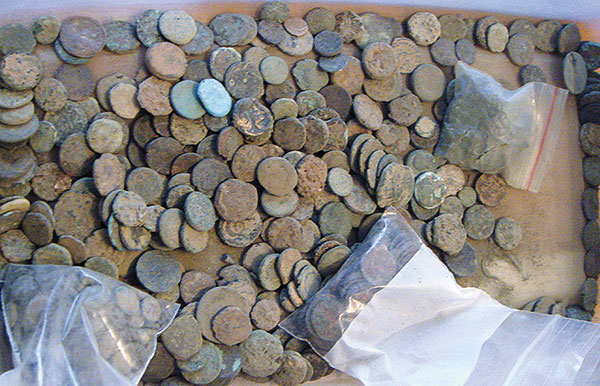
If the murder weapon clandestinely taken from our hypothetical crime scene is cleaned and sold, we can surely appreciate its rarity and the quality of its manufacture and study its production context. Ancient coins and other artifacts looted from sites can certainly be studied this way, too. But this object-oriented avenue of inquiry is limited because of the loss of contextual information. We cannot solve our crime scene or provide a definitive answer as to the chronology of a building type, since both were stolen without record.
The fruits of illegal and clandestine excavations are easy to find in auction catalogs and online storefronts. The most widely collected and sought-after ancient objects are coins. Research demonstrates that millions of coins enter the market each year from unrecorded digging. The U.S. market alone imports hundreds of thousands of earth-encrusted coins annually that are smuggled from Balkan nations such as Bulgaria. Although archaeologists almost universally condemn looting and indiscriminate sourcing practices in the antiquities market as detrimental to the study of the past, numismatists (specialists who study ancient coins) have been more reticent to condemn the effects of looting and the unregulated trade. Because the study of coins lies at the intersection of multiple fields, including archaeology, art history, Classics, ancient history and economics, specialists come from a diverse array of backgrounds and ask different questions of the evidence. Those numismatists who come from some backgrounds may find the provenance of a coin of little concern if, for example, their research is purely iconographical. Another reason a numismatist may be less concerned is because of the fear of alienating allies in the collector and dealer communities. As numismatics has traditionally focused narrowly on the objects themselves and their production contexts, an approach driven by the fact that the vast majority of coins in public and private collections have no recorded provenance, numismatists often rely on collections and sales as source material for study. But numismatists ought to be concerned.
Although we might study coins for different reasons, our goal is the same—the writing of history. And intellectually honest people recognize that the writing of history is a multidisciplinary process; our personal approach is not the only valid approach. The iconography, archaeology, text, inscription or coin alone is not the answer; they are different pieces of the puzzle that, when brought together, provide the history. This is not to say that numismatists ought to ignore decontextualized objects or objects in private collections in their research. As most source material for numismatic study resides in public or private collections without a recorded provenance, it would be impossible and intellectually dishonest to pretend that these objects, many of which are unique, do not exist. We must, however, endeavor to preserve, and encourage the preservation of, as much information as possible, even if it is not directly relevant to our own research process. We must be conscientious as to how our own actions may condone or, worse, encourage destructive behavior.
Collectors as well should practice due diligence when acquiring material. Collectors of ancient coins tend not to collect for financial investment. Most collect out of a genuine passion for ancient history; in this, we are all allies. True lovers of ancient history do not encourage the loss of historical information by buying objects that come from unrecorded digs where the lack of recording and scientific processes is destructive. Instead, they insist on provenance and a solid collection history in order to avoid putting money in the hands of people who buy from looters, smugglers and other middlemen who exploit the past for financial gain. The burden is on us, whether we are archaeologists, numismatists or collectors, to take responsibility, to evaluate our own actions and to preserve our common, human heritage.