
Archaeological Views: Should Archaeology Be Used as a Source of Testable Hypotheses About the Bible?

In his First Person column in the July/August 2011 issue of BAR,a Hershel Shanks argued that the Bible can be a source of a testable hypothesis. In other words, an archaeologist should be able to open the Bible, read a verse, formulate a hypothesis, and then conduct an archaeological excavation in order to prove or disprove the hypothesis.
At first blush, this seems like an entirely appropriate and scientific approach. Yet Hershel laments that this approach is often criticized by archaeologists and suggests that scholarly protests are based on prejudices against the Bible. He further challenges that this same kind of approach would be acceptable with other Near Eastern texts.
I think Hershel is wrong; such concerns are not born of a prejudice against the Bible and have little to do with the Bible per se. The issue is not the use of texts to generate hypotheses or identify research questions. The potential problem lies in the circularity of then returning to a text with the notion that it has been “proven” or “disproven.”
The debate about the relationship between text and archaeology is not unique to Biblical archaeology. Attempts to use archaeology to test the validity of texts go back much farther. The Chinese historian Sima Qian (c. 145–85 B.C.E.), the author of Shi Ji, a grand history of China’s dynastic empires, tested the accuracy of historical records through ancient artifacts (and especially objects with inscriptions). In ancient Greece, Thucydides argued that graves dug up on Delos displaying Carian burial customs confirmed a tradition that the Carian people had once lived on the island.
There are more recent examples as well. In the 1980s and 1990s, there was a particularly acrimonious debate over the use of texts in Mayan archaeology. Since Mayan glyphs had been translated relatively recently, scholars who worked with those texts argued that their research provided greater evidence for Mayan culture since they could now write a proper “history.” Archaeologists, however, feeling marginalized by this new shift in the discipline, countered that the texts told the story of only a very small group of elites, while archaeology provided a broader picture of Mayan culture.
So Hershel’s idea is not new. But does it work?
In the 1980s, there was a movement by some archaeologists to treat material culture and the archaeological record as “text,” but this experiment has mostly been abandoned. The problem is that artifacts are not texts in this way (although many texts are artifacts). Texts, rather, are conscious attempts at communication that historians use to reconstruct the past. Somebody, somewhere, wrote these texts to communicate particular ideas for particular reasons, and trying to understand those reasons is fundamental to historical and cultural interpretation.
Sometimes archaeological evidence was consciously constructed as well; as such, we can talk about “reading” ancient art in similar ways that we think of reading ancient texts. But more often than not, archaeologists use social scientific approaches to try to make sense of the leftover traces and artifacts of ancient cultures. In other words, texts and material culture provide different information about different aspects of ancient life, and while there may be overlap, this overlap should not be assumed.
Much of my own work has been devoted to comparing textual and archaeological data from the Late Bronze Age coastal city of Ugarit in modern Syriab in an attempt better to understand Bronze Age economic practices. The results of the comparison surprised me. I found that the conclusions drawn from textual evidence were very different from those based on material culture. The two types of evidence did not contradict each other, but neither did they confirm each other. Rather, they supplied very different types of information about the city’s economic life.
The economic texts, mostly found in the palace, suggested a highly organized and administered city where people had very distinct jobs and specialized skills. Most of the production involved agriculture and the manufacture of products like wine, olive oil and textiles, all supervised by the palace.
Archaeologically, however, the houses of the everyday people of Ugarit seemed to reflect a domestic economy where each household (or neighborhood) managed its own farming and made its own clothes and tools. In elite, nonroyal houses, there were both texts and artifacts indicating that wealthier residents made a living from trade and diplomacy.
Now some may disagree with my conclusions about Ugarit’s economy, but I think most would agree that simply using one set of evidence to test the other would have yielded negative and contradictory results. The comparison, however, of different types of evidence allowed a complementary (and, to my mind, richer) view of life in Ugarit, showing the inherent complexity of ancient economics.
When we bring the Bible back into the question of using texts and archaeology in tandem, the situation is even more complex. Although some BAR readers may argue that the Bible presents a straightforward and easily comprehendible view of the history of ancient Israel, I’d point to the Queries & Comments section of any issue of BAR where reader letters reflect a diversity of understandings (many contradictory) about what is written in the Bible. The Bible is a heavily curated document, meaning that it has gone through significant editing to become the book that we know today. To uncover the complexity of the Biblical past certainly requires more than simply treating a Biblical verse as one would a scientific hypothesis (which was purposefully designed to be tested in a scientific fashion). The Bible is an extremely rich resource for scholars of the ancient past. But it needs to be treated as the incredibly complex resource that it is.
How then should an archaeologist use the Bible? We need to understand that archaeology and Biblical studies provide different types of information about the past. Instead of using one class of evidence to “prove” or “disprove” another, we should try to understand how the differences and similarities in the evidence can make sense together. By using as many types of evidence as we can and treating this evidence with the academic rigor expected of different fields of study, we then have access to multiple, potentially intersecting but rarely identical approaches to understanding the Biblical past.
Archaeological Views: The Archaeology of Scribbles

Many archaeologists in Israel refer to the Negev’s ancient rock art as “scribbles.” They mean this quite literally, as most of the drawings (technically called petroglyphs) are far from being the work of master artists. Depictions of human figures lack detail, and sometimes don’t even show the correct number of arms and legs. Animal drawings are little more than a few lines used to form a body, some legs, and maybe a horn, hump or tail. And the abundant geometric patterns are often just simple clusters of lines, circles and other basic shapes.
Although lacking aesthetic appeal, the rock art of the Negev, unlike most “mainstream” categories of archaeological evidence (such as pottery, lithics and architecture), gives us direct entry to the lives and thoughts of real human beings. The drawing and its style can reflect the carver’s interests, his state of mind and even his relationship to the society in which he lived. Among the Negev’s rock art, for example, are scenes of hunting, trapping, combat and worship. On occasion, one also finds depictions of parents accompanied by their children, and animals with their young. There is even a panel or two showing individuals having sex.

Despite its potential significance, however, the Negev’s rock art has generally been neglected by archaeologists. There are two major reasons for this. First, few scholars have actually ventured into the Negev to examine its rock art. Until well into the 20th century, the Negev was a dangerous barren wilderness occupied by Bedouin tribes. And for those explorers such as Edward Henry Palmer, who did venture into this wasteland, the Negev’s petroglyphs were “mere scratches on the rock, the work of idle loungers, consisting for the most part of mere names interspersed with rude figures of men and animals.”1 Given this attitude, it is hardly surprising that the Negev’s rock art was rarely documented.
The second reason petroglyphs have generally been overlooked is that they can be extremely difficult to date. In some cases, inscriptions written in Greek, Aramaic, Nabatean, Thamudic and early Arabic give an approximate date for an accompanying drawing, but such signed works are rare among the thousands of petroglyphs found in the Negev. Likewise, while scientific techniques like radiocarbon dating, thermoluminescence dating, and micro-erosion and micro-stratification analysis of patina (the dark “varnish” that gradually develops over petroglyphs) have revolutionized the archaeological study of rock art in other parts of the world, these empirical methods have yet to be applied in the Negev—primarily because a clear chronology for the rock art of the Negev has not been developed. Although such scientific methods may help to date individual carvings, they are of little use for developing an overall chronology of rock art styles, which in most cases changed little over thousands of years. Emmanuel Anati has attempted such a chronological schema for the Negev petroglyphs,a but his arguments about the evolution of drawing technique, size and subject matter have generally failed to convince.
In order to form a reliable chronology of rock art styles, thousands of individual stones and panels need to be meticulously documented and analyzed. This is where my research is focused and, after documenting 1,371 rock art panels across the Negev, which contain nearly 7,000 drawings, shapes and motifs, I am beginning to make some significant progress. For example, I have found that images are sometimes carved one over another, thereby providing a relative sequence of styles and dates. Likewise, some images depict animals that went extinct in the Negev long ago (such as the hartebeest) or animals that were domesticated in the historical past (such as the camel). Also, by comparing the relative shade of the patina of different petroglyphs carved on a single surface, one can begin to determine which motifs are older and which are younger. Finally, I am using statistical tests to prove that different rock art motifs from different periods generally follow certain stylistic conventions.
Already my work is showing that rock art can reveal a great deal about the Negev’s population and its interaction with neighboring regions at various times. For example, the rock art helps to identify two different groups who lived in the Negev during the Early Bronze Age (c. 3300–2000 B.C.E.). The first group, who lived in the central Negev highlands where much of the rock art is found, carved images of the ibex almost exclusively. The ibex is one of the Negev’s most common desert animals and, in the ancient Near East, its image often had sacred connotations. The second group, which was concentrated around major cities in the northern Negev, made the bull the focus of their art and religious imagery, as evidenced by the many bull images and figurines found at the site of Arad and elsewhere. The image of the ibex, however, is not found at Arad. The contrasting use of imagery shows that the central Negev’s desert groups saw themselves as culturally distinct from their northern urban neighbors.
The people of the Negev continued to carve ibexes into the Iron Age (c. 1200–586 B.C.E.) and, again, their rock art contrasts with the iconography used by other groups. At the caravan stations (and roadside shrines) of Horvat Qitmitb and ‘En Hazeva, which some have proposed served the religious needs of local nomadic groups, excavators found numerous sacred depictions of bulls and other horned animals and deities. But if the ibex was the symbol used by the local desert population, then the bull was most likely associated with the merchants and outsiders who were passing through. As such, these sites were not used by the local nomadic groups.
A final example comes from the Roman era, when the Negev was crossed by Nabatean caravans making their way to the port cities of the Mediterranean. Although the Nabatean presence in the Negev is well established through historical and archaeological evidence, as well as several Nabatean inscriptions, no clear Nabatean rock art tradition can be identified. This stands in marked contrast to the rock drawings carved by the nearly contemporaneous Thamudic-speaking tribes, who occasionally signed their names to depictions of ibex and camels.
I see rock art as a graphic reflection of an individual’s thoughts at a specific time—the lone desert shepherd who carved an image, most likely for his own use. This personal, individual act stands in contrast to the innumerable and often mass-produced finds that archaeologists typically study.
Archaeological Views: An Anthropologist’s View of Early Israel

As an anthropologically trained archaeologist, I am often asked, “What does anthropology have to do with Biblical archaeology?” My response is usually a lighthearted, “not as much as it should.”
Anthropology and archaeology are, of course, distinguished by the vitality of their subject matter: Anthropologists concern themselves with the living, while archaeologists prefer the dead. For the past century, anthropologists have used a method based on participation and observation. This means that anthropologists partake in the daily life of their subjects, asking lots of questions both formally and informally. They do this while simultaneously maintaining a critical perspective (not in the negative sense), particularly regarding the structural and functional makeup of the society.
In contrast, archaeologists can neither live with their subjects nor interview them. All we have are clues from the past, which by themselves are highly skewed toward materials that have a long shelf life. Thus excavation reports include countless examples of ceramic vessels, stone objects and architectural foundations but very little clothing, wooden objects or organic foodstuffs.
That is why archaeology’s tie to cultural anthropology is so important. While archaeology extends the timeframe of human cultures into the distant past, anthropology provides valuable interpretive tools for archaeologists. The most important of these is that of ethnographic analogy. A basic definition goes something like this: the use of ethnography—the study of a living people—to infer how another group may have lived long ago. In other words, by looking at behavior observed among peoples in the modern era, archaeologists may draw a picture of what to expect from an ancient group that lived in a similar fashion.
This provides an extremely valuable resource to archaeologists and has been widely adopted. Open up a recent journal on Inca or Maya studies, peruse a monograph on early agriculture, or read about incipient civilization along the river valleys of the Indus, Yangtze, Nile or Euphrates. In all of these cases you will find that the archaeological remains have been interpreted in light of ethnographic analogies.
Yet Biblical archaeology has struggled to keep up. Because anthropology was not part of the initial fabric of the discipline—as it was in New World archaeology—it has been at best intermittently exploited (some exceptions include the work of Lawrence Stager of Harvard University,a Thomas Levy of the University of California, San Diego,b Avraham Faust of Bar-Ilan Universityc and Gloria Londond). Two decades ago, it seemed that this might change, particularly in interpretations of early Israel, but unfortunately most debates since then have focused on issues of proper dating and arguing over whether or not King David was a real king (again, through the prism of chronology, among other things). While these are indeed important issues, they have done nothing to bridge the two disciplines and have led to the relative isolation of Biblical archaeologists from the larger archaeological community.
I would certainly like to see this change. Those of us trained in anthropology need to do a better job advocating our anthropologically oriented interpretations. Students of Biblical archaeology should be encouraged either to major in anthropology or at the very least to include a cluster of such courses in their curricula. Conference organizers should continue to reach out to anthropological perspectives as ASOR (the American Schools of Oriental Research) has done in their sessions titled Theoretical Approaches to Near Eastern Archaeology. Once the conversation begins, anthropologists and Biblical archaeologists will discover that they have much to share with each other.
Let me conclude with an example from my own research. Recently I have been exploring ancient Israel through the lens of social and political complexity. While most Biblical archaeologists agree that Iron Age I Israel (c. 1200–1000 B.C.E.; the period of the Judges) was a tribal society, there has not been much discussion on what that really means, that is, what kind of tribal society was ancient Israel?
To find out, I began by culling the anthropological literature on tribal societies, from “Big Man” to “acephalous” (literally, “without a head”) to chiefdoms. I then used these paradigms to construct a model of how they might be identified in the archaeological record. Finally, I compared the actual archaeological record with my model. This has led me to conclude that Iron Age I Israel best fits the paradigm of a “Big Man” society.
In brief, “Big Man” societies generally correspond with small, autonomous, village-based agricultural communities. Good examples of “Big Man” societies are found in Melanesia and New Guinea where the typical village size is about 100 people. Leadership is informal and emerges out of achievement based on charisma, personality, etc.; it is not inherited. No one is considered inherently superior to anyone else, and this egalitarianism is manifest in uniform material wealth. The giving of gifts is important for establishing relationships and reciprocal obligations.
By using this ethnographic material, we give ourselves a new avenue for interpreting early Israel. That leadership was conceived of as informal during the period of the Judges is expressed most clearly in an episode concerning Gideon. After a successful campaign against Midian, the “men of Israel” specifically request that Gideon and his children become permanent leaders: “Rule over us, you, your son, and your grandson as well” (Judges 8:22). Gideon rejects the offer on behalf of himself and his children in the spirit that the “Lord alone shall rule over you” (Judges 8:23).
While this passage makes explicit that the Judges (shoftim) did not pass on their leadership from generation to generation, only the anthropological literature can inform us just how hard it is to be a leader when you have no formal authority. You have to beg, nag, harass and persuade people to do what you want. You have to be a good talker and patient and persistent. Your reward is the reward of leadership and no more. Yet these leaders emerge, and the rest of the people tolerate them, egg them on and benefit from their hard work.
This type of political organization can continue unimpeded for centuries, even millennia. But in certain circumstances, a threshold is crossed and a new type of leadership emerges, that of a chief who is given (or seizes) significant power and authority. How does this happen? We’ll just have to ask an anthropologist.
Archaeological Views: Cultic Practices at Tel Dan—Was the Northern Kingdom Deviant?

Archaeologically speaking, very little is known of the ancient Israelite cult as it was practiced by the kings and priests of Biblical Israel. While evidence for “folk religion” (e.g., the ubiquitous pillar figurines) is well known, evidence of royal or elite religion is harder to come by. One reason for this is that the center of official Israelite religion, at least according to the Bible, was Jerusalem’s Temple Mount, a site that cannot be excavated in the current political climate.
The Jerusalem Temple was not ancient Israel’s only royal sanctuary, however. According to the Bible (1 Kings 12), the infamous Jeroboam, first king of the northern kingdom of Israel, established a sanctuary at Dan intended to rival the Temple in Jerusalem. Over the past four decades, archaeologists working at Tel Dan, especially the late Avraham Biran,a have uncovered a treasure trove of cultic material from the site’s so-called “sacred precinct.” Here, on the northwest side of the mound, they found temple-like architecture, the remains of a massive four-horned altar, painted cult stands, and a metal bowl and shovels associated with sacrificial rites. Dan, therefore, provides an intriguing—and, at this point, unique—window into the realia of royal Israelite worship. But, since the Biblical writers often condemn the northern kings as religious heretics who had come under the influence of foreign gods, and we know of foreign—particularly Aramean—presence at the site, how “Israelite” were the practices carried out there?

This question, among others, drew me to study the textual traditions and archaeological remains associated with ancient Israelite religious practices at Tel Dan. Under the tutelage of the late faunal expert Brian Hesse,b I focused one aspect of my recent study on a less-utilized witness to the site’s cultic activities: thousands of animal bones excavated from the sacred precinct.
When I started examining the bones, I wondered if I would find patterns that differed from “orthodox” priestly religion, since Dan was, after all, the cultic center of the apostate kings of the north, according to the Bible. What I found, however, was quite the opposite: In both areas of the sacred precinct—one reserved for priests and the other for common worshipers (as indicated by my reconstruction of the area)—the bone fragments seemed to be similarly indicative of Israelite religious practice as described in the priestly traditions of the Bible, such as those in Leviticus.
For example, in the priestly area of the Tel Dan sacred precinct there was a greater proportion of right-sided meaty long bone fragments, compared to a greater proportion of left-sided bone fragments in the area of ordinary worshipers. This is consistent with the Biblical prescription that priests receive the right hindlimb (or forelimb) of the “fellowship offering” (Exodus 29:27–28; Leviticus 7:32–33).
Similarly, the area of the priests included a much higher percentage of “toe bones” (i.e., phalanges) than in the area of the ordinary worshipers. Again, this pattern is consistent with the Biblical prescription that priests receive the skin of the “burnt offering” (Leviticus 7:8), which typically included the phalanges and hooves left intact during the initial phase of skinning.
These are not the only convergences between the archaeological finds and the Biblical text concerning ritual practice. For example, an “altar kit” found in the sacred precinct includes implements similar to those described for Temple and Tabernacle rituals in the Bible, including a bowl that may have been used in distinctive blood manipulation rites.c
Some scholars believe that the traditions in the Bible’s priestly literature are hundreds of years later than the evidence at Tel Dan. This evidence suggests, however, that these Biblical traditions may be older than is often assumed.
In addition, the Tel Dan findings suggest that the cult attributed to Jeroboam was not so deviant as is often thought.
With this in mind, we may go back and read the eighth-century B.C.E. prophets who often decry the attitude of the northerners rather than their presumed aberrant cultic rites: Amos’s cry to do away with the cultic festivals of the north—including their associated burnt offerings and fellowship offerings (Amos 5:22)—assumes that the northerners were, in fact, carrying out their cultic duties with regard to Biblical law. Thanks to the bones, it now appears to have been the case.
Archaeological Views: Digging a Hole and Telling a Tale

In the July/August 2011 issue of BAR, Hershel Shanks’s First Person dealt with Ronny Reich’s new book, Excavating the City of David.a In Reich’s book he commented on Eilat Mazar’s excavations, also in the City of David, where she claims to have found King David’s palace.b Reich objected to Mazar predicting that she would find David’s palace and then conducting an excavation in which she claimed to have located exactly what she set out to find.
The controversy between Reich and Mazar, while characterized by Shanks as one over scientific method, may be characterized from another point of view. When I excavated with the late archaeologist and Biblical scholar Anson Rainey at Tel Beer Sheva, he used to say, “Archaeology is the science of digging a hole and the art of telling a tale.” I think the argument between Reich and Mazar is more about art than science.
Reich and Mazar probably agree on how to “dig a hole,” that is, how to scientifically excavate an ancient site. Their dispute appears to be more about “telling a tale,” that is, how they make sense of—and communicate—their discoveries. In telling that tale, archaeologists like Reich and Mazar have to figure out how archaeological and Biblical evidence relate to each other. In general, archaeologists and historians have approached the relationship in three ways:
1. Archaeology as corroboration of the Bible. In the early years of excavations in the Holy Land, during the first half of the 20th century, archaeologists made specific efforts to corroborate the Biblical text. Excavators were looking for a witness to the narratives featuring Abraham, Moses, Joshua, David, Solomon and the later kings of Israel and Judah.
Occasionally, the archaeological evidence did seem to support the Biblical narratives. For example, the Iron Age city gates found at Hazor, Megiddo and Gezer were thought by many to be the same fortifications attributed to Solomon in 1 Kings 9:15.c Other archaeological evidence, however, appeared to contradict the Biblical account. Kathleen Kenyon’s excavations at Jericho, for example, found that the site was not even occupied during the Late Bronze Age, when the Israelites, led by Joshua, were supposed to have conquered the city.d In truth, most of the archaeological evidence—potsherds, garbage pits and house fragments—seemed irrelevant to any Biblical concerns at all.
2. Archaeology as context for the Bible. By the second half of the 20th century, archaeologists sought a second way of integrating the Biblical and archaeological evidence. Though they admitted that much of their evidence did not corroborate the Bible, they insisted archaeology could provide a context for its stories. They took on the task of filling in the background while leaving the foreground to the Bible. The traditional narratives told of heroic events, but they did not tell us where David slept every night or what he ate when he woke up in the morning. Architectural remains at sites all over Israel, while usually not providing information about David or any other specific Biblical personality, revealed what a typical Israelite house looked like, and the bones and seeds recovered from those same sites showed what was consumed and cooked in Biblical homes.
3. Archaeology tells its own story. By the end of the 20th century, rather than viewing their work as providing a context for Biblical traditions, archaeologists wanted to tell their own stories of the past. Their discoveries and findings provided the story and the Bible provided the background.
For instance, the “story” of the rise of the kingdoms of Judah and Israel from a scattering of simple villages to a more centralized urban society has been the focus of much research in the past 20 years. Archaeologists, using primarily the evidence from surveys and excavations, have constructed a narrative wherein a population shift at the beginning of the Iron Age created an explosion of villages throughout the Galilee, the Negev and the hill countries of Judah and Samaria. Out of this decidedly rural village culture, there eventually arose urban centers like Jerusalem, Samaria, Tel Beer Sheva and Lachish. For the most part, this “story” relies on ruins and potsherds to drive the narrative.
It is interesting to note, however, that these archaeological stories are often populated with references to the Bible. The Iron Age I villagers, rather than being anonymous, are given Biblical names such as Israelites or Amalekites, while the urban development of the early monarchy is seen through references to Israel’s first kings, Saul and David. It is a story born of rigorous scholarly effort, a story of a social process rather than an epic populated by heroes, but it is no less a story, and even a Biblical one in some measure.
This brings us back to the dispute between Eilat Mazar and Ronny Reich. At least as described by Shanks, Mazar wanted to tell a Biblical story corroborated by what she would find in the ground. Reich was more interested in telling an archaeological story with some ancillary help from the Bible. Given identical evidence, Reich and Mazar could end up telling two very different stories, depending on how they read together the archaeological and Biblical evidence. Their debate has a long history and is not about science. It is about how to piece together the Biblical and archaeological evidence to create a narrative.
Writing history is never easy. It may be especially difficult when the historian is faced with fragmentary archaeological remains on the one hand, and a rich and sacred textual tradition on the other. How to read those two sources of evidence together to create a history is not self-evident.
Archaeological Views: New Eyeballs on Ancient Texts

The study of ancient texts—especially those that tell us most about the cultures from which the Bible emerged—is on the edge of a revolution. Dramatic new imaging technologies are just now becoming available that allow us to see and reclaim the readings of ancient documents in a manner never before possible.
One of these new technologies, called Reflectance Transformation Imaging (RTI), allows for unprecedented control of how an image is displayed, especially in terms of the play of light so crucial to bringing out hidden details that are often the key to proper interpretation. For the first time, control of the light has been placed in the hands of the viewer rather than the photographer. In fact, an RTI image is almost like seeing the real thing—only it’s better.
Pioneers in the development of RTI are two scientists at Hewlett-Packard Labs, Tom Malzbender and Daniel Gelb (the latter the grandson of I.J. Gelb, the great pioneer of Sumerian studies), although others have been working on the technology as well, including our group, the West Semitic Research Project, at the University of Southern California (USC). It involves taking a series of successive images all around an object with the light for each picture situated at a different angle and height but always from about the same distance. This can be done in a light dome or by moving a single light around an object and taking a series of pictures, thus building a virtual light dome. A software program then takes the data from these pictures (a typical set is 32) and builds from them a master image, called a texture-map, which can be displayed on a computer.
The image retrieved—say of a cuneiform tablet or an otherwise hard-to-see seal impression—doesn’t look very interesting when it is first displayed. But then the magic happens. As you move your computer’s cursor around the image with a mouse, it acts like a very powerful virtual flashlight. As the cursor moves, so moves the light. Suddenly, subtle variations on the artifact’s surface are dramatically clarified. And if something is not clear from one angle, that’s okay; you simply move your cursor around to examine it from another angle.
With a couple clicks of the mouse, you can switch from examination with one virtual light source to two. Or, if you prefer, you can switch to a mode called “specular enhancement”—what I like to call the super-shiny effect. This mode makes it appear as though the object is dusted with a virtual layer of silver. Then, as you move the light, the object flashes a mirror-like finish that brings even the tiniest variation of texture into startling clarity.
Yet another mode, “diffuse gain,” can be dialed up so that the contrast is enhanced to a point that even subtle brush strokes on a painting, or ink thicknesses on a Dead Sea Scroll, can be easily picked out.
It’s hard to explain what an RTI image looks like with mere words. And, assuming you are reading BAR on paper, as most people do, I can’t really show you what I mean, either. To be sure, the static illustrations above give you a small sense of what an RTI image can show, but the dynamism of the images is missing—and the dynamics are the most essential part.
Think of it this way: When an ancient reader picked up a clay tablet with cuneiform wedges impressed on its many surfaces, he or she could not read it without moving it. Moving the tablet was essential, because only by changing the play of light by tilting the object in the sun could the reader actually see subtle details and thus the shapes and positions of the wedges.
RTI comes close to replicating this ancient experience. While in an RTI image we can’t move a virtual tablet around in the sunlight, we can move the light around the tablet and achieve much the same effect. In fact, in some respects it’s better because the light can be controlled and manipulated with such precision, and one can zoom in and out on a particular sign or feature at will.


Take a look at one example, a 4,000-year-old cuneiform tablet from our own collection at USC. In the top picture you can just barely see the faint impression of the seal that endorsed the tablet, but you can’t really make out its design, let alone the name of the seal’s owner. But in the RTI image with specular enhancement, the design flashes off the surface dramatically and the signs that make up the name become clear.
Still, to really get a sense of what an RTI image is like, you are going to have to break through the paper barrier. There are a couple of ways you can do this. One of the most fun is through InscriptiFact, an online library we maintain at USC of more than 40,000 digital images of ancient inscriptions and manuscripts—from the earliest cuneiform texts to the Dead Sea Scrolls. There are lots of RTI images in InscriptiFact and, to date, it is the only such database that fully integrates high-resolution RTI images with other sorts of images (even some scanned from glass negatives going back more than a century). You can register to use the database for free at www.inscriptifact.com.
You can also go online to watch videos that show RTI images in action, as well as how and why RTI works. Plus, download a free RTI viewer and some sample RTI images so you can—quite literally—get the picture. It’s your chance to see firsthand how this technology is revolutionizing the study of ancient texts.
Archaeological Views: An Archaeological Cold Case Solved

In a recent issue of BAR (January/February 2011), the acronym DSI was used to refer to a “Dig Site Investigation,” comparing the tools and methods of modern archaeology with the work of forensic detectives from the popular TV show CSI (an acronym for “Crime Scene Investigation”). The analogy can certainly be applied to ongoing field excavations, but it can also be applied to the work of archaeologists like me who are responsible for publishing the languishing and often-neglected records of excavations conducted many decades ago.
These excavations hold unique archaeological insights and they cannot be replaced. Earlier generations of archaeologists often chose the most historically significant and centrally located sites. Because what has been dug can never be excavated again, it is crucially important that current and future archaeologists have access to the records—including notes, maps, plans and photographs—that were generated from the excavation of these sites, particularly now that many of these “old” sites are being re-excavated with modern tools and techniques. Working without the data from earlier, unpublished excavations is akin to putting together a jigsaw puzzle knowing that the crucial pieces are misplaced somewhere in the attic. Making sure the work of earlier archaeologists is published, therefore, is far more than a simple exercise in archaeological ethics and good housekeeping.
Publishing old excavations, however, is an extremely complicated process, principally because the single most important source of information, the original excavator, is often deceased. That is the case in the project that Martin Peilstöcker of the Israel Antiquities Authority (IAA) and I have been working on since 2007: the re-excavation of ancient Jaffa.1 We have labored to locate, analyze and publish the excavations of ancient Jaffa (now located within the urban sprawl of modern Tel Aviv) undertaken by Israeli archaeologist Jacob Kaplan from 1955 to 1974.
Kaplan was the municipal archaeologist for Tel Aviv. He was responsible for saving dozens of coastal sites from the ever-expanding metropolis. Initially, Jaffa was a salvage excavation, but thanks to Kaplan’s efforts, the site was given protected status and it soon became his principal excavation project. When Kaplan died in 1989 at age 79, his wife took possession of most of his excavation records and, when she passed away in the late 1990s, many of these were deposited with the IAA and made available for study. Other records from Kaplan’s excavations, however, including photographs and artifacts, had been misplaced or transferred to other collections. Bringing these disparate pieces together into a coherent record of Kaplan’s excavations at Jaffa presented a considerable challenge.
In addition, rumor had it that Kaplan’s excavation methods were substandard and, even worse, that he sold artifacts from his digs and destroyed many of the excavation records. Many scholars simply assumed, therefore, that Kaplan’s records could not be salvaged for publication. In many ways, our efforts to reconstruct Kaplan’s work at Jaffa are similar to detective work. Of course, we examined the records. But we have also interviewed anyone who had any substantive contact with Kaplan, particularly old staff members, to learn as much as we could about his work. We have also written countless e-mails to follow any lead that would help us track down certain objects recovered in the old Jaffa excavations.
What we have found has been surprisingly helpful. Everyone we have interviewed claims that Kaplan robustly documented his work at Jaffa and generated a host of notes, plans and photos, most of which we now possess. But we have also learned that some records are missing and perhaps still waiting to be found, such as detailed drawings of excavated objects in situ.
In addition, archaeologists who worked with Kaplan or knew him personally have assured us that his work was in keeping with the best standards of his day, especially considering that many of his excavations were conducted out of necessity, to salvage important archaeological sites like Jaffa from urban expansion. This was confirmed in our review of his records, which reveal an archaeologist who readily adopted modern excavation techniques. By the 1970s, for example, Kaplan was systematically numbering excavated strata and collecting a wide variety of non-ceramic finds, such as bones, lithics, and even floral and carbon samples.
Finally, some of the mysteries surrounding missing artifacts were solved as we were able to match up references in Kaplan’s records with artifacts housed in the storerooms of the Jaffa Museum of Antiquities. Other artifacts, unfortunately, appear to have been lost, possibly having been loaned to other collections without proper documentation. And, despite the uncertainty regarding the location of many finds, we have found absolutely no evidence that Kaplan or his wife sold any of the artifacts excavated from Jaffa.a
From our investigation into Kaplan’s excavation, we now know much more about ancient Jaffa, especially during the Late Bronze Age (c. 1550–1200 B.C.E.), when the city was occupied by an Egyptian garrison.b We know, for example, that the early Egyptian fortress of Jaffa was destroyed in a Canaanite insurrection (possibly remembered in the Egyptian tale of the Capture of Joppa2), which left in its wake one of the largest and most significant collections of Egyptian pottery (apparently from the garrison’s kitchen) in Late Bronze Age Canaan. Prior to our research into Kaplan’s records, we knew only that Kaplan had recovered ceramics from an Egyptian context; now we know the phase of occupation and historical setting with which these artifacts are associated. And because of Kaplan’s records, we know approximately where to look for this destruction in the site’s dense stratigraphy (about 95 feet above sea level), which thereby allows us to broaden the exposure of this important level in our own excavations and further investigate how the garrison interacted with the local Canaanite population.
From my experience working with Kaplan’s records and reinvestigating a site that holds such importance, I now understand that much of the detective work of modern archaeology is done not on hot summer days in the field, but during dark and cold winter nights, when time can be found to piece together the scraps and clues left behind by earlier generations of archaeologists.
Archaeological Views: Uncovering the Secrets of the Dead

In 604 B.C.E. Nebuchadnezzar II destroyed ancient Ashkelon, leaving the town in ruins. In 1992 archaeological excavations carried out by Lawrence E. Stager, director of the Leon Levy Expedition to Ashkelon, discovered grim evidence of this event.a On the floor of a shop burned and ruined during the destruction was a badly crushed human skeleton. It was sprawled on its back with limbs splayed, indicative of sudden death.
Who was this person abandoned in the debris? One of the invaders or one of the victims? What kind of life did this person lead, and what was the cause of death? The bones hold the answers to many of these questions.
Examination showed that these were the bones of a woman. Women tend to be smaller and less muscular than men. This means that their bones are more slender, with smaller protuberances for muscle attachments. The differences are most marked in the skull and pelvis. For example, the angle between the upper borders of the eye sockets and forehead of this skeleton were sharp, and the bone above them was smooth, lacking the ridges typical of men. The bony protuberances behind the ears (the mastoid processes) were also small and thin, in contrast to those of men. In addition, the pelvic bones were everted at their bases, pushing out the hips, a female adaptation that maximizes the space available for the birth canal.

Measurements show that she was around 5 feet tall, which is well within the average heights recorded for women in ancient Israel. The bones of her skull had not yet fused, indicating that she was relatively young. In addition, the surfaces of her joints were smooth, with no arthritic changes, while her teeth were only slightly worn. She was probably in her mid-30s.
We also examined the broken surfaces of her bones to determine if the fractures occurred when she was still alive or whether they were postmortem. The margins of the skull fractures were jagged rather than flat, indicating that the blows to her head, caused either by a blunt weapon or from falling debris, occurred when she was still alive or shortly after death.
For the biological anthropologist, the information obtained about this woman is the beginning of an odyssey into the past. Examination of human skeletal remains from archaeological contexts provides a direct link to our predecessors and enables us to reconstruct the rate and pattern of change and its contribution to the present diversity of humankind. Integrating our biological and cultural heritage enables us to understand better the way in which genes and culture have been interwoven over the past millennia to create the world we inhabit today.
Success in defining ancestral populations, however, is contingent on the availability of large, well-excavated skeletal samples. Despite the numerous archaeological excavations carried out in Israel, this goal is unlikely to be achieved in the near future given the current attitude toward biological anthropology.
While the natural sciences have come to play an increasingly important role in Israel in recreating the setting of past cultures, bio-anthropological research into the people themselves, as represented by their skeletal remains, has taken a large step backwards. This follows a controversial decision by the attorney general in 1995 that excluded human skeletons from the list of “biological remains” protected under Israeli antiquities law.
Today, especially at salvage excavations carried out in Israel, a nonacademic religious organization—Atra Kadisha—is routinely called in to excavate and remove human remains for reburial in a common grave without proper bio-anthropological documentation.b Although cursory examination of skeletal remains on site is sometimes permitted, this is totally unsatisfactory given the need to clean, reconstruct and analyze human remains in a specialized laboratory setting. In such facilities, we not only measure, photograph and take radiographs, we also analyze the skeletons using a vast array of modern tools. These include CT scans, scanning electron microscopes, as well as DNA and isotope analyses, all of which enable us to reconstruct in great detail the life history of past individuals and populations.
While cemeteries and isolated tombs are still occasionally excavated in Israel, we are largely unable to obtain scientific information about the human individuals for whom these tombs were constructed. Had the Ashkelon skeleton been excavated after 1995, it is unlikely that we would have been able to examine her in as much detail. This means that today, we are in the absurd situation of carrying out research into past societies exclusively through the study of their material culture without access to the most direct and conclusive data set, namely the evidence obtained from their skeletal remains.
This unhappy situation is further reflected in the fact that Israeli universities do not offer undergraduate degrees in biological anthropology, despite the fact that teaching and research in this field is expanding throughout the rest of the world. Sadly, if the current situation continues, archaeological research in Israel will focus on pots and not people, returning us to the days when archaeology was little more than tomb robbery.
Archaeological Views: A Case Against the Repatriation of Archaeological Artifacts

When I proposed a column to BAR editor Hershel Shanks on the issue of repatriation of artifacts to the country of origin, he said it was not something that engaged him. It didn’t matter to him, he said, where an artifact was located as long as it was available to scholars to examine and study, and was available to the public to see and appreciate. But Hershel is wrong. There is more to it than this. The real problem with repatriating artifacts is the sacrifice of one country’s history for the sake of another.
Western nations need to begin protecting their own histories, especially as requests for repatriation become more and more frequent. Greece, which desires the return of the Elgin Marbles, housed in the British Museum since 1816, has opened a new Acropolis Museum in Athens so the Marbles will have a proper home if they return. Zahi Hawass, now Egypt’s minister of antiquities, has for years discussed a list of six major pieces of Egyptian art that he would like to see brought back to Egypt (see sidebar). Arguments fly back and forth regarding the legality of England’s ownership of the Marbles and the legality of Berlin’s ownership of a bust of Nefertiti, one of the items on Hawass’s list.
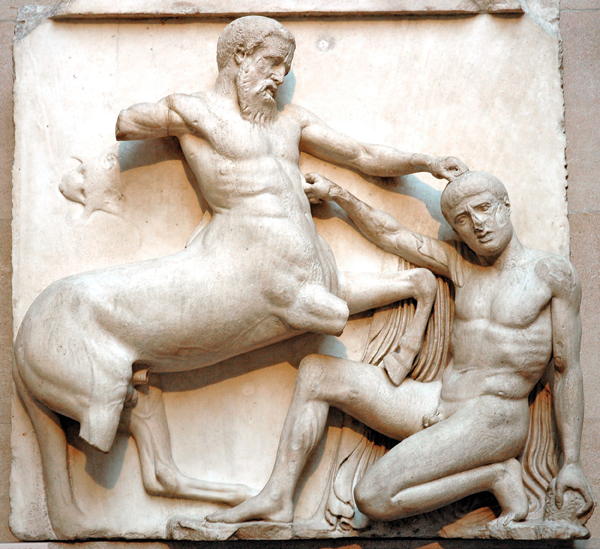
But museums in Western countries quite reasonably want to retain their centuries-old collections. The arguments they use against repatriation often suggest that local governments and museums would not be able to properly steward certain artifacts as well as they can. These arguments are often dismissed as condescending, but they should be considered in light of the extreme economic instability in Greece and its lack of funding for even basic archaeological preservation, as well as the revolution in Egypt, which led to some damage of the Egyptian Museum in Cairo, the disappearance of artifacts, and the looting of archaeological sites and storage facilities throughout the country.
But the real problem with repatriation is the loss of history. When we repatriate artifacts to nations such as Greece and Egypt, we simultaneously destroy the evidence of the more recent history of other countries, including Britain, France and Germany. When archaeological teams from these Western European countries excavated in Ottoman lands in the 19th century, they were doing so because of the possibilities afforded them by the politics of the day. Some of that has since been labeled colonialist, but regardless of labeling, for several hundred years many Eastern countries were not interested in digging up their own history and were usually willing to give permits to Westerners, who craved knowledge of the “Orient.”
Under the terms of most Ottoman firmans (royal decrees or permits), significant archaeological materials were allowed to leave the country with the permission of the local government. Even after the fall of the Ottoman empire, partage agreements, which divided up the finds between the country or institution that excavated and the local government, remained common. The current regimes of some of these countries certainly have different priorities from previous governments, but that does not de-legitimate agreements made in the past. Certainly Egypt and Greece are entitled to write new chapters in their history, but they cannot pretend the past did not unfold the way it did.
A good example comes from Israel: The Siloam tunnel inscription, found in Jerusalem’s well-known Biblical-period waterworks in the City of David, has always been housed in the Istanbul Archaeology Museum. The tunnels were cleared by the British when Palestine was under Ottoman control, and the inscription itself was illicitly removed from the tunnel by locals, recovered by the British and finally brought to Istanbul.a Should this inscription be returned to Israel, even though Israel was not yet a state when it was excavated? (The Israeli government suggested this in 2007, and Turkey rejected the request.)
The ancient and modern history of two well-known artifacts shows the absurdity of carrying repatriation claims to their natural conclusion. First is the Rosetta Stone, discovered in Egypt by a soldier in Napoleon’s army. Should that go back to Egypt as Dr. Hawass wants? Perhaps instead, the French should demand that the Rosetta Stone be returned to France, as the British army took it from French hands when they forced Napoleon’s troops out of Egypt in 1801!
Even more telling is the history of the Law Code of Hammurabi. This 4,000-year-old law code, inscribed on a tall diorite stela, is famous for containing Mesopotamian laws that parallel many of those in the Bible. Hammurabi’s Code is housed in the Louvre in Paris, because French archaeologists excavated it in the ruins of ancient Susa in Persia (now Iran). The Code was written around 1800 B.C.E. by the Babylonian king Hammurabi, who displayed it publicly in the city of Sippar (in modern Iraq), a religious center not far from Babylon, his capital. The stela remained in Sippar for some 600 years, until the 12th century B.C.E., when the Elamites, an ancient nation located within what is now Iran, declared war on Babylonia and carried it off to Susa as war booty. There it lay, until the French archaeologists found it and brought it, with permission, to the Louvre.
If Hammurabi’s Code were to be repatriated today, where would it go? Should it go to a museum in Iran since it was excavated there in modern times? Or should it go to Iraq, where it was manufactured and spent its first half-millennium? As we try to erase the history of European Orientalism and colonialism, should we also erase the physical evidence of the Elamite-Babylonian conflict?
Artifacts are not people, and as such, cannot be in exile. Many artifacts have only known one home since they were dug up, and for many of them that home is in a Western museum. To take the artifacts out of museums is to degrade the history of Europe and the West.
Archaeological Views: Teaching Biblical Archaeology

We are two longtime friends who teach at different universities, one a midsized private university (George Washington University in Washington, D.C.—Cline) and the other a branch campus of a large state university (Purchase College, State University of New York—Hallote). We offer a variety of different classes, but we have one in common: Biblical Archaeology. Each of us has taught the class numerous times over the years, with enrollments ranging from 25 to 110 students (depending on how early in the morning the class is offered!).
Teaching Biblical archaeology to undergraduates is very different from teaching the subject to graduate students. While we would have no qualms about discussing the intricacies and nuances of Iron Age IIA pottery, architecture or mortuary practices with graduate students, we cannot do so with undergraduates, for two main reasons.

1. Biblical archaeology is often the first—and often only—archaeology class these students will ever take. They need to grasp the basics before all else.
2. We need to devote quite a bit of class time to combating, or at least addressing, some of the misconceptions that students have about the field. Our students come in with knowledge about the subject primarily from television documentaries and their religious education. Many of them hold their faith dear, whether Christian, Jewish, Muslim or other, and either do not know what to expect or have questions about archaeology and the Bible, especially about Moses and the Exodus, Abraham and the Patriarchs, and Joshua and the Israelite Conquest of Canaan. When presented with the frequently ambivalent or even nonexistent data available to answer such questions, they respond in a variety of ways—intrigued, hostile, defensive, combative, accepting or neutral—but they are almost always interested and engaged.
This is why both of us begin each semester by warning students that exposure to the material may result in their questioning their faith and/or what they learned in Sunday school or Hebrew school. In particular, if they have taken the class to understand how archaeology confirms the Bible, we inform them that they might want to take some other class instead, because that’s not how Biblical archaeology works.
That is different from the real task of teaching Biblical archaeology. This subject covers a study of the lands and peoples of ancient Israel and the Near East from the early second millennium B.C.E. to the early first millennium C.E. We also know that we are going to have to address some very specific questions—from the whereabouts of Noah’s Ark and the Garden of Eden to whether the Ark of the Covenant ever existed and if the parting of the Red Sea can be linked to the eruption of Thera in the Aegean.
One of us (Cline) has chosen to be proactive in addressing these two distinct aspects of a Biblical archaeology course. For example, when discussing Late Bronze Age Canaan, in the first meeting, I feature an interactive PowerPoint lecture focusing on the pottery, architecture, material culture and burial customs of the period and its major sites, along with an overview of relevant textual discoveries such as the Amarna letters. During the second meeting, however, I specifically discuss the archaeological evidence for the Exodus, which almost always develops into a rough-and-tumble, no-holds-barred, free-for-all debate. Every student is invited to weigh in, present the relevant data and express his or her opinion, and no hypothesis is dismissed out of hand before it has been carefully considered by the entire class. And, just before we run out of time, I take a vote as to which hypothesis for the Exodus seems most likely; usually the choices are between an early date (c. 1450 B.C.E.), a late date (c. 1250 B.C.E.), a gradual process (taking place over 200 years) or a nonevent (i.e., created by the Biblical authors). The results of the vote change each semester, sometimes dramatically, depending on the character of the class.
The other (Hallote) takes a rather different approach. I try to get students to switch the questions they ask. Instead of having a discussion about “Did the Exodus happen?” I steer the conversation toward historiography and zero in on why the Exodus narrative became so important for Israelites and Judahites of the sixth century B.C.E., when some scholars believe the narrative was compiled. Then we discuss the threads of archaeological evidence that do exist, how they may or may not relate to what appears in the Bible, and talk about how histories are written.
Another major problem involves something completely basic and yet essential to the course: which textbook(s) to use. Between us we’ve tried them all, from Amihai Mazar’s Archaeology of the Land of the Bible to Israel Finkelstein’s and Neil Asher Silberman’s The Bible Unearthed. Choosing a textbook, however, is a little like Goldilocks and the Three Bears: one is too dense and detailed; another is not detailed enough. One is too biased, another is so impartial as to be bland and boring. And virtually none addresses both the “scientific” side of Biblical archaeology (i.e., the material culture) and the “religious” side of Biblical archaeology (i.e., did the Exodus take place?). So, we both usually assign at least two different textbooks and then supplement them with articles, including, of course, articles from past issues of BAR.
In the end, though, we both agree that this is one of the most rewarding classes that we teach, in part because we are always finding new ways to look at the evidence.
By the way, auditors are welcome, if there are any seats available …