
The Story of Creation
THE J. PAUL GETTY MUSEUM, PUBLIC DOMAIN
Through April 19, 2026
Getty Center
Los Angeles, California
getty.edu
An exhibition currently on view at the Getty Center in Los Angeles explores humanity’s enduring fascination with how the world began. Titled Beginnings: The Story of Creation in the Middle Ages, the exhibition focuses on medieval representations and interpretations of the well-known biblical narrative, which it contrasts with divergent cultural reflections on the world’s cosmic and spiritual origins.
The traditional creation story of the first two chapters of the Book of Genesis is illustrated through 15 medieval manuscripts from the Getty Museum’s collection. These are presented alongside contemporary paintings by Los Angeles-based artist Harmonia Rosales, whose artworks introduce West African Yoruba cosmology, exploring resilience and the identity of voices often left out of history.
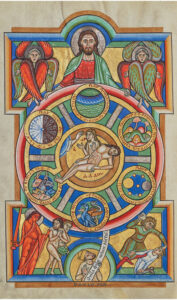
The exhibit revolves around several themed sections, including “Visualizing the Creation,” which features a full-page illumination from the Stammheim Missal (shown here). Made in the 1170s in Germany, the lavishly painted parchment leaf presents the seven days of creation. It shows God between two heavenly creatures at the top, presenting a disc with six circles arranged in clockwise fashion, with an additional circle in their middle. Beginning with the creation of light at top left and ending with the creation of Eve in the center, these roundels are captioned with God’s commands to identify the dramatic events of each day. The bottom of the page features Adam and Eve’s expulsion from Eden, the killing of Abel, and a figure of King David.
Milestone: Phyllis Trible (1932–2025)

COURTESY WAKE FOREST UNIVERSITY
Internationally renowned biblical scholar Phyllis Trible passed away on October 17, 2025, at the age of 92. She was a pioneer in feminist biblical studies whose teaching and writing changed how generations of scholars came to understand the task of biblical interpretation.
Trible received her bachelor’s degree in religion from Meredith College. She graduated with her Ph.D. in Old Testament studies in 1963, having completed the joint doctoral program offered by Union Theological Seminary and Columbia University. She first taught at Wake Forest College (now University) and then spent several years teaching at Andover Newton Theological School. In 1979, she joined the faculty at Union, where she was named Baldwin Professor of Sacred Literature. In 1998, Trible returned to Wake Forest as a founding faculty member and Associate Dean of the university’s School of Divinity. After retiring from Wake Forest in 2012, she returned to Union to teach as Visiting Professor in fall 2015.
Trible’s best-known books, God and the Rhetoric of Sexuality (Fortress, 1978) and Texts of Terror: Literary-Feminist Readings of Biblical Narratives (Fortress, 1984), are required reading in feminist biblical studies. Together, they exemplify Trible’s genuine love for the Bible, her rigorous methodology and exacting use of rhetorical criticism, and her deep ethical commitment to feminism. Through the years, she also shared many of her critical insights into the Bible with readers of BAR and Bible Review.a
A meticulous scholar of generous spirit, Trible dedicated her life to feminist interpretation that was complex and self-critical. Her approach not only inaugurated feminist biblical interpretation, it also helped fuel a sea change in the field by bringing method and the ethics of interpretation to the fore.
Digs 2026: More Than Meets the Trowel
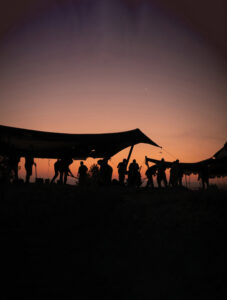
PHOTO BY EFRAT SHFFI, COURTESY LAUTENSCHLÄGER AZEKAH EXPEDITION
In joining an excavation for the first time, many dig volunteers might dream of discovering the Ark of the Covenant, the next Rosetta Stone, or a magnificent golden statue hidden away in the remains of some ancient temple. The reality of the dig experience, of course, is far more mundane, with volunteers spending most of their days in the trench excavating pottery sherds, discarded pieces of bone, and, not surprisingly, lots and lots of dirt.
Yet, as any archaeologist will tell you, it is often the most mundane, ordinary, and entirely expected finds that can reveal the most dramatic insights into the ancient past. Here, we visit several of Israel’s most prominent excavations to learn about seemingly routine discoveries that, when studied with the latest scientific methods and techniques, completely changed how archaeologists thought about a site’s history, function, or ancient inhabitants.
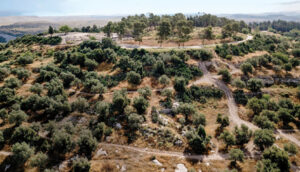
PHOTO BY OMER ZE’EVI-BERGER, TEL HADID ARCHAEOLOGICAL PROJECT
At Tel Hadid, a large multiperiod site located in the area of modern Tel Aviv, the local topography was dramatically shaped by the countless generations who settled there across the millennia.a Especially notable are the many agricultural terraces that ring the slopes of the ancient mound. But when were these terraced fields—a common sight in the region’s rural landscape—first built and cultivated? Unable to date the terraces using traditional means (such as pottery or radiocarbon dating), the team turned to optically stimulated luminescence (OSL) dating, which measures how much time has passed since buried soil samples were last exposed to sunlight. Using this method on soils from the terraces, archaeologists found they were likely first farmed in the Byzantine period (c. 324–634 CE), revealing the continuous nature of site formation processes at Tel Hadid.
COURTESY OF THE JEZREEL VALLEY REGIONAL PROJECT
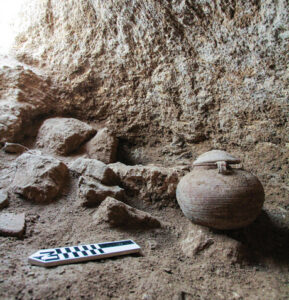
Similarly, at Legio—the imposing camp of Rome’s Sixth “Ironclad” Legion located at the foot of ancient Megiddo in northern Israel—archaeologists uncovered several cemeteries where soldiers stationed at the base were buried.b In line with ancient Roman burial practices, however, most of the deceased were cremated, leaving precious few skeletal remains for archaeologists to study. But the team didn’t give up. Partnering with Tel Aviv University’s archaeology laboratory, they are testing a new method that will allow them to collect DNA samples from cremated remains. If successful, they will gain incredible insight into the background and daily lives of the soldiers of the Sixth Legion, including where they were from and what their diet may have been like.
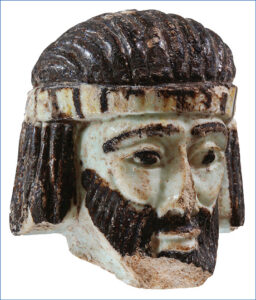
PHOTO BY GABI LARON, COURTESY THE TEL ABEL BETH MAACAH EXCAVATIONS
At Abel Beth Maacah, also in northern Israel, archaeologists recently discovered a small, 2-inch-tall faience head during excavation of the site’s Iron Age citadel.c Routine analysis of the head—thought to be part of an idealized representation of a royal figure—revealed much about its design, date, and decoration, though key questions remained, including how it was made. Someone from the team then suggested conducting a CT scan on the piece, which would provide a look inside the object without causing irreparable damage. The scan ultimately revealed that the head (and presumably the rest of the statue) had been crafted using a mold.
At the nearby Late Bronze Age Canaanite city of Hazor—famously remembered in the Book of Joshua as “the head of all those kingdoms” (11:10)—excavations in one of the temples of the lower city identified a massive ceremonial pit (favissa) filled with broken and discarded cultic pottery and other ritual objects.d The sheer quantity of pottery allowed graduate student Ron Palzur to conduct a robust scientific analysis of the different types of ritual vessels that were discarded and how they were used. Amazingly, his study revealed that the entire ritual deposit—which included cooking pots, lamps, and other vessels—had been created during a single ceremonial event and was then immediately buried and covered over.
Finally, at Tell es-Safi, a site in the Shephelah identified with the Philistine city of Gath,e a quarter-century of excavations produced countless examples of beer-drinking vessels used and enjoyed by ancient Israel’s archenemy. As such, when excavator Aren Maeir was approached by microbiologists Ronen Hazan and Michael Klutstein about doing a more detailed analysis of the pottery to see what more could be learned about Philistine beer culture, he gladly accepted. Remarkably, even after thousands of years, active yeast cells could still be found in the fabric of the ancient clay. Propagating the yeast in the lab, Maeir, Hazan, and Klutstein learned not only what types of yeast were used in Philistine beer (surprisingly, the same families of yeast that are still used in beer making today), but also how to brew the yeasty concoction themselves.
No matter what a dig season brings, modern archaeological methods and techniques can extract more information than ever before, unlocking the secrets of the biblical world. As demonstrated by the remarkable discoveries discussed here, even the most commonly excavated materials have the potential to dramatically change our understanding of the past, from soil samples that reveal when an area was first farmed to pottery containing microscopic yeast cells that can be used to recreate ancient beer. So, if you’re volunteering for a dig this summer, remember that even the tiniest and most insignificant finds can hold great value for archaeologists, often considerably more than you might think.
Who Did It?
SMITHSONIAN INSTITUTION ARCHIVES, VIA WIKIMEDIA COMMONS
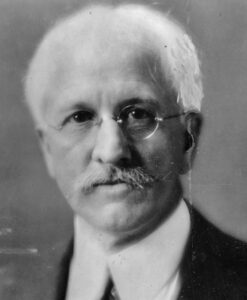
Who coined the term “Fertile Crescent”?
1. James Henry Breasted
2. William F. Albright
3. Flavius Josephus
4. Agatha Christie
5. Lawrence of Arabia
Answer: (1) James Henry Breasted
James Henry Breasted (1865–1935) was a renowned and prolific American archaeologist. In 1894, he became the first American to receive a doctorate in Egyptology at the University of Berlin. Almost immediately thereafter, he joined the faculty of the University of Chicago, where in 1919 he founded the Oriental Institute (now called the Institute for the Study of Ancient Cultures),a a world-renowned center for advanced research in the history and archaeology of the ancient Near East. His countless expeditions yielded a wealth of artifacts both large and small that formed the core of the institute’s museum collection.
Breasted popularized the use of the term “Fertile Crescent” to refer to the broad sweep of arable lands running from the Persian Gulf northward through Mesopotamia, westward through Syria to the Mediterranean Sea, and southward along the Levantine coast; many scholars now extend the concept further to include the Nile Valley in Egypt. Breasted recognized that the richness of these lands was a crucial factor in the emergence and flourishing of the early civilizations that developed there, whose agricultural prowess was sufficient to sustain large populations and even contributed to the development of the world’s first cities.
Dam of Biblical Proportions
COURTESY EMIL ALADJEM, ISRAEL ANTIQUITIES AUTHORITY
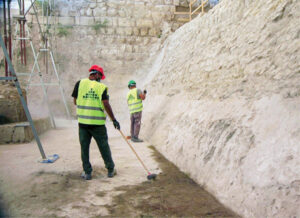
Archaeologists working in Jerusalem’s City of David Archaeological Park discovered an immense dam that was built to capture water flowing down the Tyropoeon Valley on its way out of the city. Radiocarbon analysis dates the dam’s construction to the late ninth century BCE, sometime during the reigns of Kings Joash and Amaziah of Judah. The water that accumulated behind the dam may have created the large reservoir that some scholars believe was the biblical Pool of Siloam, a key water source within Jerusalem’s fortifications.
The ancient dam, the largest ever discovered in Israel, measures about 40 feet high and more than 26 feet thick. Archaeologists exposed a nearly 70-foot-long stretch of the dam, but the barrier is certainly longer, as it continues beyond the limits of the current excavation. Researchers believe the dam helped the city overcome short-term fluctuations in rainfall, providing a ready source of water during periods of low precipitation while also protecting against flash flooding during heavy rains.
The monumental dam is the latest discovery related to Jerusalem’s extensive Iron Age water system, which also included the Spring Tower (possibly the biblical Millo) that guarded the Gihon Spring, and Hezekiah’s Tunnel, constructed in the late eighth century to conduct water from the Gihon Spring to the Pool of Siloam.
Artistry in Ivory
KOBY HARATI / COURTESY OF THE CITY OF DAVID ARCHIVES AND THE ISRAEL ANTIQUITIES AUTHORITY
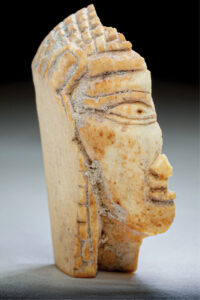
Excavations on Jerusalem’s southeastern ridge, which was the heart of the city during the time of the biblical kings, have yielded a rare and precious find: a small piece of ivory, less than an inch tall, carved in the shape of a woman’s head. Broken in half in antiquity, the face exhibits narrow eyes, prominent lips, an Egyptian hairstyle, and a headband with a small square element on the side. Given its diminutive size, the piece likely decorated a larger object, such as a piece of fine furniture.
The ivory was discovered in a layer of fill material that was securely dated to the seventh century BCE. It is likely, however, that the decorative piece is older, given that luxury items were often kept for multiple generations. This means that it may even predate Judah’s vassalage to Assyria, providing important insight into the kingdom’s early participation in the broader commercial and cultural world of the Near East.
This depiction of a woman is a unique prize, since carved ivories discovered previously in Jerusalem depict only geometric or floral motifs, perhaps reflecting the biblical taboo on graven images. The ivory head thus suggests that Jerusalem’s wealthy embraced the latest styles from across the region, which often featured similar female portraits. Nevertheless, it is difficult to know what exactly the piece meant or symbolized, as it is different from other female head depictions, which typically adorn statues, sphinxes, or window balustrades.
50 Years Flashback: Heathen Humor

—–
In its early years, BAR offered its readers an exciting array of products, novelties, and accessories celebrating the discovery and adventure of biblical archaeology. We sold BAR-branded T-shirts, ties, umbrellas, Dead Sea Scroll mugs, elegant tote bags featuring the Madaba mosaic map, and even mold-made replicas of the famous Siloam Tunnel Inscription.
No doubt the most interesting—and controversial—merch we sold was our infamous idol set, promoted in a full-page ad in the September/October 1981 issue. The three-figure set, which included exact replicas of a Canaanite fertility plaque, a Judean pillar figurine, and a stylized metal snake from the Hathor shrine at Timna, was intended for educational display and to provide hands-on learning about the religious world of ancient Israel as revealed through archaeology.
But while most readers were receptive to our novel educational creations, others were absolutely horrified. Throughout 1982, our “Queries & Comments” department was filled with angry reader letters and “cancel my subscription” notices, with some claiming BAR was leading people into idolatry. One reader wrote: “The Lord God destroyed nations and cities that worshipped the idols you are digging up and selling. Do you want money that bad to cause a repeat of history?” The uproar led BAR, in sardonic recognition of reader concerns, to add a bright red rubber stamp over the ad, reading, “Warning: These Idols Are Not to Be Worshipped!”
Unfortunately, we no longer have any of the BAR idol sets hanging around the office. If you ordered a set back in the ’80s and still have them lying around, we’d love to hear from you to see how they’ve fared after all these years!—ED.
Archaeology Argot: Ostracon

ZEV RADOVAN/BIBLELANDPICTURES, VIA ALAMY
The original meaning of the Greek word ostracon (pl. ostraca) is “animal shell”—think turtles, snails, or clams. This meaning was soon transferred to denote any hard convex object, including pottery sherds. Ancient Athenians famously used such fragments as ballots in their juridical practice of ostracism (literally, “judgment by sherds”), in which citizens voted to banish individuals deemed too powerful or influential and hence dangerous to Athenian democracy.
Within archaeology, ostracon denotes a particular type of artifact—an inscribed potsherd. In the strict sense, an ostracon is a potsherd that was inscribed after the original ceramic vessel was broken and its pieces discarded. In both the classical and Near Eastern worlds, such potsherds were cheap and readily available media for writing short messages, usually with reed pen and ink. For practical reasons, most ostraca were inscribed on the outer side, which is convex and smoother. In size, they usually do not exceed 4 inches so as to fit comfortably in one’s hand.
Most surviving ostraca contain short texts of personal or administrative character. Among these ephemeral types of documents are letters, private notes, scribal exercises, receipts, lists, orders, and drafts of or excerpts from larger documents. Ironically, such mundane writings largely survived from antiquity, while longer and more important documents on papyrus or parchment mostly decayed.
In ancient Israel, groups of ostraca were found at Arad, Samaria, and Lachish, among other sites. The letter shown here, dated to around 587 BCE, comes from Lachish and was written by one Hoshayahu to Yaush, the city’s military commander. Trying to exculpate himself from an undisclosed accusation, Hoshayahu addresses his superior: “Who is your servant but a dog, that my lord should remember his servant?”
Test Kitchen: Byzantine Spiced Wine
For this recipe, we travel to ancient Constantinople (modern Istanbul), the capital of the mighty Byzantine Empire. Founded in the seventh century BCE as a Greek colony known as Byzantion, the city prospered for centuries as a trading hub. In 330 CE, the Roman Emperor Constantine I—who famously legalized Christianity—“refounded” the city, renaming it Constantinople and establishing it as the eastern capital of the Roman Empire. When Rome and the western empire fell in 476, Constantinople continued as the capital of the Byzantine Empire for nearly a thousand years, until its fall to the Ottomans in 1453.
Despite this long and prosperous history, we do not have any culinary recipes from the Byzantine Empire itself. We do have some medical texts that mention foods and drinks, however, as well as a few texts from Byzantine citizens who lived in foreign lands. This recipe, which comes from the March section of a medieval-era dietary calendar attributed to Hierophilus the Sophist, simply reads: “Your sweet wine should be spiced, including pepper, cinnamon, spikenard, and cloves.”
Only one ingredient may prove troublesome to obtain. Spikenard, an oil that was often used in perfumes, is derived from a flowering honeysuckle plant that grew in the mountains of East Asia. This oil was a luxury in the ancient Mediterranean; it is often referred to as “nard” in biblical texts such as John 12:3, where Mary of Bethany pours the expensive oil on Jesus’s feet before wiping them with her hair. If you can’t find spikenard, honeysuckle tea is an alternative.
Spiced wine can be served hot or cold but is probably best served warm on a cold night. So grab a mug and enjoy as you cuddle up with the latest BAR!—J.R.D.
Milestone: Leonard J. Greenspoon (1945–2025)
COURTESY OF THE FAMILY OF LEONARD GREENSPOON
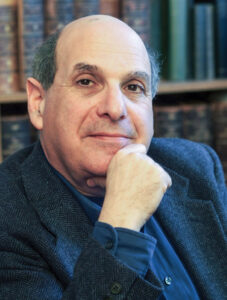
A towering scholar who made biblical scholarship accessible to BAR readers for nearly two decades, Leonard J. Greenspoon—the Philip M. and Ethel Klutznick Chair in Jewish Civilization at Creighton University—passed away on May 22. He was 79 years old.
After completing both his bachelor’s and master’s degrees at the University of Richmond, Greenspoon went to Harvard to study Classics for his Ph.D., though he soon transferred to biblical and Near Eastern studies. His dissertation, published as Textual Studies in the Book of Joshua (Scholars Press, 1983), demonstrated his dual command of Semitic and classical languages and inaugurated his influential role in the study of the Septuagint (the earliest known translation of the Hebrew Bible—into Koine Greek, beginning with the Pentateuch in the early third century BCE).a
From 1975 to 1996, Greenspoon taught at Clemson University, where he developed new course offerings and published prolifically. His scholarship in Septuagint studies, including his contributions to a new English translation of the Septuagint, led him to serve as the president of the International Organization for Septuagint and Cognate Studies from 1993 to 1999. An incredibly wide-ranging scholar, Greenspoon would go on to publish some 200 journal articles and book chapters on diverse subjects such as the Hellenistic period, Bible translations, the Dead Sea Scrolls, the Holocaust, Jews in popular culture, and Jewish humor.
In 1996, Greenspoon accepted the Klutznick Chair at Creighton University, a decision that allowed his interests to blossom further. He always wrote with wit, clarity, and accessible eloquence, and realized that his style could serve a popular audience. As his career progressed, he enthusiastically developed another type of translation, transforming the fruits of scholarship into language that was interesting and understandable to the public. An apt illustration was his regular column “The Bible in the News,” which ran in BAR and, before that, in Bible Review, from 2001 to 2016. Writing in the first person with warmth and humor, Greenspoon gave readers a deep comprehension of sophisticated concepts, approaching them as a friend rather than a pedagogue.
The consummate researcher, Greenspoon shared the results of scholarly inquiry with the wider world. A majestic scholar and beloved teacher, treasured mentor and devoted friend, his enduring contributions served both the public and the academy and thus carved out a path for future seekers of truth.