
Biblical Archaeology Review, Winter 2026
Features
The Assyrian king Sennacherib remembered his campaign into the southern Levant as a glorious success. Although he destroyed several major cities, he did not conquer Jerusalem, instead besieging the city and trapping its king, Hezekiah, “like a bird in a cage.” Enter Sennacherib’s throne room to see how he depicted the siege of Jerusalem—and how he framed his failure to take the city as a victory.
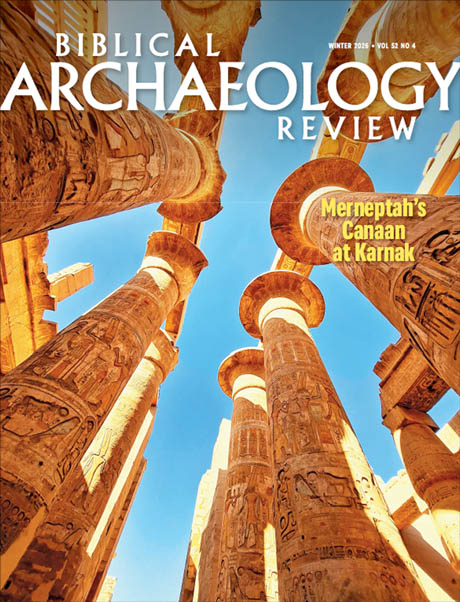
Pharaoh Merneptah’s military campaign into Canaan is famously recorded in his victory stela, but where are these achievements celebrated in the monumental reliefs of Egypt’s ancient capital, Thebes? Modern imaging technology confirms that a wall of reliefs in the Temple of Amun-Re at Karnak commemorates Merneptah’s victories in Canaan, where the pharaoh reportedly destroyed a people called “Israel.”
In , the discovery of the first Dead Sea Scrolls at Qumran forever changed biblical and archaeological scholarship. Despite the scrolls’ significance, however, we know relatively little about the anonymous scribes who copied and preserved these precious manuscripts. Investigate scattered scribal clues found in both the scrolls themselves and Qumran’s archaeology.
A series of puzzling rock-cut rooms discovered in Jerusalem’s City of David excavations was originally interpreted as a religious complex. However, mysterious V-shaped carvings on the floor, as well as other finds, suggest an industrial rather than cultic purpose. Explore these curious features along with intriguing parallels from across the Near East to consider the rooms’ actual function.