
Where Was Constantine’s Palace?

PHOTO BY MARK FAIRCHILD
Despite years of searching, the location of Constantine’s Nicene palace is still unknown, though there are clues to be found in the city’s archaeology, if you know where to look.
Modern İznik overlays most of Constantine’s city, with its ancient remains often concealed 10 feet or more below the surface. Fortunately, the city’s ancient walls, which encircled Nicea on three sides opposite Lake İznik, can still be traced for more than 3 miles. Most of the wall is made of roughly laid bricks, fieldstones, and mortar built in the mid-third century CE. Along the city’s northern wall, however, there is a 325-foot section of well-dressed stone ashlars more typical of Roman imperial construction. An eighth-century Greek inscription preserved on one of the wall’s towers suggests these Roman ashlars were in secondary position, having been used to repair a breach in the wall suffered during the Umayyad siege of Nicea in 727.
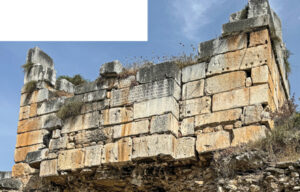
PHOTO BY MARK FAIRCHILD
Could this restored section of Nicea’s city wall contain the remains of Constantine’s palace? Along with the ashlar blocks, a number of reused columns can be seen in the restored section of the wall. The ashlars and columns used to fill the breach must have come from a nearby structure, one that was built to the highest Roman imperial standards. I believe this structure may have been Constantine’s palace, which was likely located somewhere nearby in the city’s northwestern quarter.