
Sacred Center: The Iron Age Temple at Biblical Ataroth
© APAAME / PHOTO BY MAT DALTON
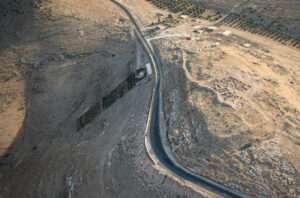
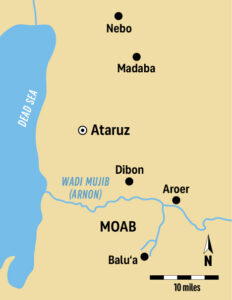
Perched high on a Jordanian ridge overlooking the Dead Sea, the ruins of Khirbat Ataruz house the remnants of a remarkable Iron Age temple complex, dating from the ninth to the sixth centuries BCE. This site—likely the ancient city of Ataroth mentioned in the Bible (Numbers 32:3, 34)—was once a vibrant center of worship.
During two and a half decades of excavation at the site, we have uncovered a sprawling sanctuary complete with altars, high places, courtyards, and even a monumental staircase, all vividly depicting religious life on the desert frontier of the southern Levant.1 Perhaps most astonishing, an inscribed incense altar found at the site may recount a fierce battle between Moab and its enemies, which may link the ruins of Ataruz to a legendary rebellion recorded in both the Bible (2 Kings 3) and the famous Mesha Stele.
—–
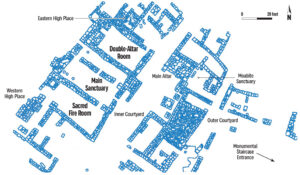
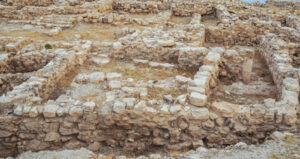
At the heart of Khirbat Ataruz lies a large Iron Age temple complex built atop the site’s acropolis. Erected in the early to mid-ninth century BCE, this temple dominated the ridge and would have been visible for miles. The temple was oriented to the southeast, toward the rising sun on the summer solstice—a feature consistent with other ancient cultic buildings found in the southern Levant. The complex structure was carefully planned, consisting of multiple rooms and courtyards serving different ritual purposes. It was accessed from the east via a broad monumental stairway that led from the area of the city gate below. Visitors presumably climbed this staircase to approach the temple complex, literally ascending to a higher, more sacred elevation.
CHANG-HO JI AND BONG-JAE KIM
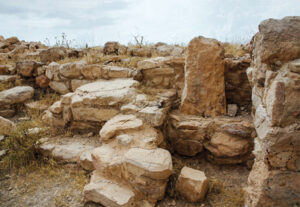
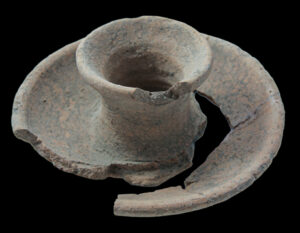
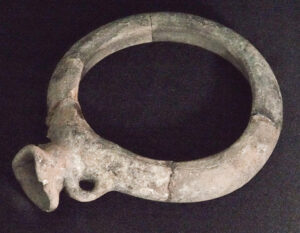
The main temple building was a tripartite structure consisting of three long, parallel chambers constructed side by side. The central chamber was the primary sanctuary—the sacred heart of the complex. At the back of the room, excavators found a tall standing stone (massebah) set upright on a stone podium. This stone likely represented the temple’s principal deity in aniconic form. Next to the standing stone was a stepped offering platform where priests could lay out offerings or perform rituals, such as libations and incense burnings. The floor of the sanctuary was strewn with cultic artifacts: large storage jars adorned with clay bulls’ heads, incense burners, ring-shaped libation vessels (kernoi), cup-and-saucer vessels, chalices, carved stone bowls, lamps, mortars, and pestles.
Inside the main sanctuary chamber, to the northeast, a portion of the space was partitioned into a long, narrow side room. Pottery fragments and cultic miniatures, like those found in the main sanctuary, were discovered here, indicating that this side room likely played a supporting role, perhaps serving as a storage area for ritual equipment or a preparation space for worship and offerings. The auxiliary room had multiple doorways linking it to the main sanctuary, which may have facilitated easy movement between sacred spaces during ceremonies.
A.D. RIDDLE / BIBLEPLACES.COM
To the southwest of the central sanctuary was another chamber we nicknamed the “Sacred Fire Room.” This area accessed the temple’s main chamber through a small entrance in the room’s northeast corner. In this room stood a square stone altar or hearth that was used for cultic rituals. Excavators found the altar’s interior filled with fine ash. Notably, no animal bones were found, suggesting this hearth was not for cooking meat but for maintaining an ever-burning flame. The fire may have signified the perpetual presence of the temple’s god. A small rectangular niche in the wall just behind the hearth likely held a statue or emblem of the deity.2 One can imagine a priest tending the flame in this dim room, believing the god’s presence was near.
On the northeast side of the main sanctuary stood the temple’s third chamber, which we dubbed the “Double-Altar Room.” This space exhibited signs of ritual activity, including two stone platforms that likely functioned as secondary altars or supports for cultic objects. Unlike the main sanctuary and Sacred Fire Room, which were discovered relatively undisturbed, the Double-Altar Room was extensively reused during the Hellenistic, early Roman, and middle Islamic periods, leaving traces of each period in the remains. This later occupation removed much of the earlier Iron Age remains and associated cultic objects, leaving only a few artifacts from the Iron Age to be discovered.
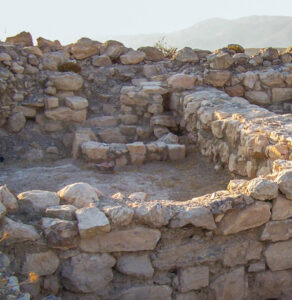
Flanking the temple’s three chambers were two elevated “high place” platforms for outdoor worship. The “Western High Place,” partially excavated (the rest lies beneath a modern cemetery), was a rectangular stone platform measuring at least 8 by 13 feet and raised more than 3 feet above the courtyard. Four steps led up to its top. Here, under the open sky, priests could have offered incense or sacrifices in full view of onlookers. On the northeast side of the complex stood the “Eastern High Place,” a large stone terrace measuring approximately 16 by 26 feet. A broad staircase of five steps climbed its eastern face, providing access to its summit. These high places functioned as extensions of the main temple—open-air sanctuaries where rituals could be performed outside the confines of the temple rooms.
CHANG-HO JI
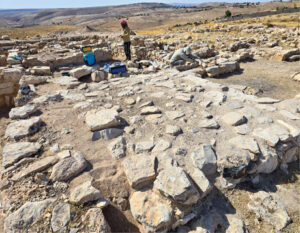
To the southeast of these structures stretched the temple’s courtyards, which organized movement through the sacred precinct. Directly in front of the temple building was an inner courtyard. In this area, we discovered five stone altars arranged along the southeast end of the courtyard. Four small to medium-sized altars faced southeast, and a large main altar on the north had a broad staircase leading up to it. Daily burnt offerings were likely made on these altars. Imagine the scene in antiquity: worshipers gathered in the court-yard as a priest slaughtered an offering of a lamb or goat and sacrificed the animal as a burnt offering upon the altar. Smoke rose toward the sky as prayers were recited. To facilitate such public ceremonies, a set of stepped stone benches was built along one side of the courtyard, providing seating for observers to watch the proceedings. Nearby, a rock-cut cistern—its mouth carved with a bull’s head—supplied water for ritual purification and washing sacrificial offerings.
CHANG-HO JI
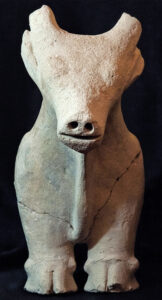
One corner of the inner courtyard housed a special cultic chamber where a remarkable artifact was discovered: a small bull statue on a low stone pedestal. This bull figurine likely symbolized the chief god of Ataruz. In many Near Eastern cultures, the bull represented a storm deity or a warrior god. Indeed, the Israelite god Yahweh and the Canaanite god Baal were often associated with bulls. Kings, local elites, and other visitors to the temple may have paid respect to this bull idol, seeing it as a physical representation of the divine. They might have left votive gifts before it, seeking the god’s favor before or after offering sacrifices in the courtyard.
Beyond the inner courtyard, to the east, lay an outer courtyard that extended the sacred precinct’s downward slope. A modest one-room shrine stood in this area, dating slightly later than the main temple. This small sanctuary, essentially a cultic shrine, had a stepped platform and a square altar. It appears to have been constructed in the late ninth century, following the destruction of the main temple a few years earlier, likely by the Moabites when they took control of the site. In the outer courtyard, we also discovered evidence of continued cultic activity, including heavy concentrations of animal bones, a bedrock area possibly used for animal butchery or blood libation, and an adjacent kitchen area with cooking facilities and storage jars. It appears that sacrificial meat may have been cooked here and shared in communal feasts, suggesting that worship at Ataruz involved offering animals to the gods and partaking in the offerings during a sacred meal.
The physical layout of the Ataruz temple complex reveals much about the cultic practices that took place there. The numerous altars and religious implements indicate that this site was used for frequent sacrifices, offerings, and other sacred rituals central to the community.
JOON-HYUNG PARK
Foremost among the rites were burnt offerings. The altars in the inner courtyard are evidence of intense burning, and bones from sheep, goats, and cattle were found in great quantities. A typical ritual might involve locals as well as visitors bringing animals to the temple as offerings to the deity, perhaps in fulfillment of a vow or as a petition for a blessing. Priests would slaughter the animals at the designated spot (we identified a nearby bedrock area likely used as a butcher’s slab), then burn portions of the meat and fat on the courtyard altars. The rising smoke and aroma were considered pleasing to the god, while the priests and worshipers shared portions of the meat that did not burn. The rest was cooked and consumed as a sacred meal, indicated by the many bones and vessels discovered in the site’s many cultic areas.
Incense and liquid offerings were also part of the ritual repertoire. A substantial stone offering platform discovered within the main sanctuary chamber suggests that non-burnt offerings were carefully arranged there. Offerings ranged from precious stones, metal artifacts, seashells, and exotic materials to grain bowls, wine or oil jars, fruits, and incense. Unique artifacts—such as cup-and-saucer vessels—appear to have functioned as incense burners, either ferrying smoldering incense into the deity’s presence or being placed near altars or offering platforms during ceremonies. As the incense burned, it produced a fragrant cloud that served as an ethereal complement to the more tangible offerings, creating sacred space for the deity and the worshipers. Likewise, libation vessels such as kernoi suggest priests may have offered sacred drinks as ritual libations or poured anointing oils onto various sacred objects or individuals.
Light and fire were potent symbols throughout the temple. The discovery of numerous clay lamps suggests that ceremonies took place in various cultic spaces, likely timed to harness the soft glow at dawn, the flickering illumination at night, or the limited light from roofed installations. In the Sacred Fire Room, a continuously burning hearth is thought to have functioned like a sanctuary lamp. This “eternal flame” symbolized the deity’s enduring presence or the covenant with the people, and its daily maintenance by temple priests would have served as a steadfast reminder of the community’s ongoing relationship with the deity.
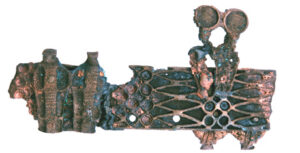
A closer examination of the cultic objects unearthed at Ataruz deepens our understanding of its religious practices. The bull statue found in the inner courtyard may hint at the significance of processions or the public display of divine symbols, perhaps carried out during festivals or maintained as a guardian figure. Additionally, a bronze plaque decorated with serpent motifs, which may have been affixed to a belt, breastplate, or crown, likely evoked themes of healing and protection, given the historical association of snakes with life and regeneration. Notably, Ataruz has produced few female figurines or representations of goddesses. This suggests that its worship focused predominantly on a singular male deity or deities symbolized by the bull and standing stone, while not totally eliminating the possibility of an occasional female divinity. This focus bears similarities to ancient Israelite religion, which traditionally eschewed image-based worship in favor of abstract symbols such as standing stones and dedicated objects, along with occasional representations of female cultic figures.a
JOON-HYUNG PARK
JOON-HYUNG PARK
Around the mid-ninth century, the temple at Ataruz experienced a violent demise. Layers of destruction—evidenced by extensive ash deposits, collapsed walls, and a smashed niche in the Sacred Fire Room—indicate the sanctuary was deliberately desecrated during a conflict. By the late ninth century, Moabite control had become evident at Ataruz. Building modifications, such as blocked doors and passages leading to the inner courtyard and the construction of a new shrine with a corresponding altar in the outer courtyard, underscore the Moabites’ adaptation of the temple complex for their own cultic needs. Despite these changes, the core rituals—burning offerings, pouring libations, and venerating the deity—remained essentially unchanged.
ROBERT BATES
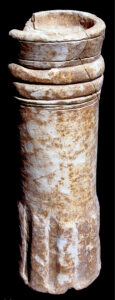
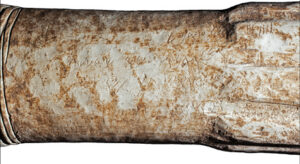
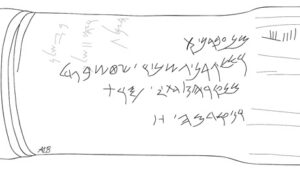
A portable stone incense burner, inscribed during the zenith of Moabite power, stands as a poignant firsthand testimony to the turbulent era. The inscribed cylindrical altar was found toppled on its side inside the site’s outer courtyard shrine. Though modest in size—about 1.5 feet tall—this artifact carries considerable historical significance. Its inscription, composed in what appears to be an early form of Moabite script, has been stylistically dated to the late ninth century, aligning with the period immediately following King Mesha of Moab’s celebrated rebellion against Israel.3
That timing is no coincidence. The altar’s inscription appears to echo the roughly contemporaneous events detailed in the Hebrew Bible and the Mesha Stele regarding Mesha’s revolt. According to 2 Kings 3, Moab was once a vassal of the northern Israelite kingdom, obligated to remit a hefty annual tribute of sheep and wool. When King Mesha rebelled, Israel and its allies, Judah and Edom, eventually launched a campaign against Moab. Yet, as recounted on the Mesha Stele, Mesha repelled these forces and reclaimed Moabite cities, even capturing Ataroth and “killing the whole population of the city” as an offering to Chemosh, the Moabite god.b
The altar from Ataruz may provide a rare Moabite perspective from the very site of this conquest. Although the inscription is weathered, fragmentary, and divided into different sections, key phrases have been deciphered. One section appears to record bronze articles seized as spoils from Ataruz, recalling a list of bronze offerings taken from the city’s temple and subsequently presented at the shrine or another site in Moab. This suggests that following Moab’s victory, the spoils of war were dedicated to their god, a common practice in the ancient world.
CHANG-HO JI
A more fragmentary section of the text appears to mention “4,000 foreign men” who were either “scattered” or “slain,” and it refers to a “desolate city” that was left behind for the Moabites. This imagery recalls the defeat of enemy forces and the subsequent depopulation of Ataroth that Mesha celebrates in his victory stela. If 4,000 represents the number of enemy casualties, captives, or inhabitants who abandoned the city fleeing Mesha, it offers a stark quantification of the battle’s outcome from the Moabite perspective. Essentially, the altar’s inscription celebrates Moab’s triumph; consistent with the details provided in the Mesha Stele, Chemosh had granted them victory over their foes and restored the site of Ataruz to Moabite control.
QAIS TWEISSI
The inscribed altar stands as one of the highlights of the Ataruz excavations, linking the site to a specific historical event. Here, a tangible piece of evidence may corroborate and enrich the narrative of the Mesha Stele and add context to the larger biblical story described in 2 Kings 3. Likely positioned within an outer shrine, it served as a monument to Moabite victory—the centerpiece of what one might even call a “victory chapel.” In subsequent ceremonies, the altar would have been a focal point of worship, its inscription constantly reminding priests and devotees of Chemosh’s deliverance of Ataruz from its enemies.
ADAM BEAN AND CHRISTOPHER ROLLSTON / A. BEAN ET AL. , “AN INSCRIBED ALTAR FROM THE KHIRBAT ATARUZ MOABITE SANCTUARY,” LEVANT 50 (2018), PP. 211–236
ADAM BEAN AND CHRISTOPHER ROLLSTON / A. BEAN ET AL. , “AN INSCRIBED ALTAR FROM THE KHIRBAT ATARUZ MOABITE SANCTUARY,” LEVANT 50 (2018), PP. 211–236
Khirbat Ataruz’s story did not end with the Iron Age, however. Although the site lay silent for centuries after the Moabite settlement came to an end in the late seventh or early sixth century, a modest revival emerged during the Hellenistic period (around the second century BCE) when a small community resettled the hilltop, reusing ancient walls and installing a plastered water feature. In the early Roman era (first century BCE–first century CE), Ataruz functioned as a quiet, agrarian village, only to be deserted again by the end of the first century CE. Remarkably, nearly a thousand years later, Ataruz sprang to life again as a village established on the mound during the middle Islamic period (13th–15th centuries). Its residents quarried stones from the Iron Age temple to build their homes. Ataruz thrived as a medieval village before its final abandonment around the 15th century, after which the site was reclaimed by nature and the grand temple complex was buried under shrubs and soil.
Fast forward to the 21st century: Modern archaeologists have revived Ataruz’s story. Excavations have uncovered one of the region’s best-preserved Iron Age temples, allowing us to peer into a world long past. At Ataruz, you can wander amid the ruins of an ancient temple and envision the events recorded in inscriptions that chronicle a chapter of biblical and Moabite history. Once alive with sacrifices, incense, and prayers, the temple on the ridge now offers an unparalleled glimpse into Iron Age faiths and conflicts. In its altars and ashes, its bones and inscriptions, Ataruz bridges past and present—a tangible reminder that the events recorded in ancient texts unfolded in real places we can still touch today.
Please join the BAS Library or become an All Access member of BAS to gain full access to this article and so much more.
Already a library member? Log in here.
Institution user? Log in with your IP address or Username
The Ataruz Temple in Context
By Chang-Ho Ji, Aaron Schade
BALAGE BALOGH / ARCHAEOLOGY ILLUSTRATED
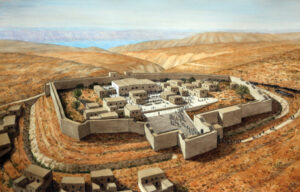
Ataruz’s central sanctuary featured a long room divided between a main hall and an inner shrine (or holy of holies). It may also have had a small rectangular entry space or forecourt (though clear evidence is still lacking), meaning Ataruz was likely similar in some respects to other celebrated Iron Age sanctuaries, including Solomon’s Temple in Jerusalem, the Ain Dara temple in Syria, and the Tell Tayinat temple in Turkey.a
But Ataruz also diverged significantly from its peers. Unlike those long-room temples, the main Ataruz sanctuary was flanked by two parallel chambers, forming a tripartite complex of three sacred rooms built side by side. Similar Iron Age tripartite shrines were excavated at Horvat Qitmit in the Negev and a small site near Wadi ath-Thamad in central Jordan, but the Ataruz temple complex far exceeds both in scale and complexity.
What is more, the entire Ataruz complex, which spans about 450 by 650 feet, was enclosed by a massive retaining wall and reinforced by a deep dry moat, which together demarcated a large, flat area for the temple and its courtyards. Indeed, nearly every structure excavated thus far, including the monumental staircase linking the site’s main gate to the sanctuary above, is related to the temple complex. To date, no houses or domestic features have been found.
In this sense, Ataruz evokes Jerusalem’s Temple Mount and the great sanctuaries of Greece, such as Delphi and the Athenian Acropolis—sacred landscapes where the entire area was devoted to religious rather than domestic or administrative purposes.
MLA Citation
Footnotes
1. See Ephraim Stern, “Pagan Yahwism: The Folk Religion of Ancient Israel,” BAR, May/June 2001.
2. See André Lemaire, “What Does the Mesha Stele Say?” Bible History Daily (blog), November 18, 2022.
Endnotes
1. For more on the excavations, see Chang-Ho Ji, “The Early Iron Age II Temple at Ḫirbet ‘Aṭārūs and Its Architecture and Selected Cultic Objects,” in Jens Kamlah, ed., Temple Building and Temple Cult: Architecture and Cultic Paraphernalia of Temples in the Levant (2.–1. Mill. B.C.E.) (Wiesbaden: Harrassowitz, 2012), pp. 203–221; Chang-Ho Ji, “Moabite Sanctuary at Khirbat Ataruz, Jordan: Stratigraphy, Findings, and Archaeological Implications,” Levant 50 (2018), pp. 173–210; and Chang-Ho Ji and Aaron Schade, “The Iron IIB Period at Khirbat ‘Ataruz,” Studies in the History and Archaeology of Jordan 14 (2022), pp. 267–285.
2. It is possible that the “Sacred Fire Altar” is related to the “hearth altar” of Ataroth mentioned in line 12 of the Mesha Stele. See Aaron Schade, “‘RYT’ or ‘HYT’ in Line 12 of the Mesha Inscription: A New Examination of the Stele and the Squeeze, and the Syntactic, Literary, and Cultic Implications of the Reading,” Bulletin of the American Schools of Oriental Research 378 (2017), pp. 145–162.
3. For more, see Adam L. Bean et al., “An Inscribed Altar from the Khirbat Ataruz Moabite Sanctuary,” Levant 50 (2018), pp. 211–236.