
Biblical Archaeology Review, Fall 2026
Features
Located on the bank of the Yarkon River just a mile from the Mediterranean coast, the Philistine settlement at Tell Qasile was a flourishing harbor town during the biblical period of the Judges (12th–11th centuries BCE). The rich array of finds from its temples and residential quarters has revealed a vibrant, blended community that combined both Canaanite and Philistine traditions.
The monumental tombs dotting Jerusalem’s Kidron Valley have been associated traditionally with towering figures from the He-brew Bible. In reality, these funerary monuments mostly date from the late Second Temple period. Their location along the main ceremonial route into the city conveyed the status and prestige of Jerusalem’s wealthiest families while also evoking the spiritual significance of Temple pilgrimage.
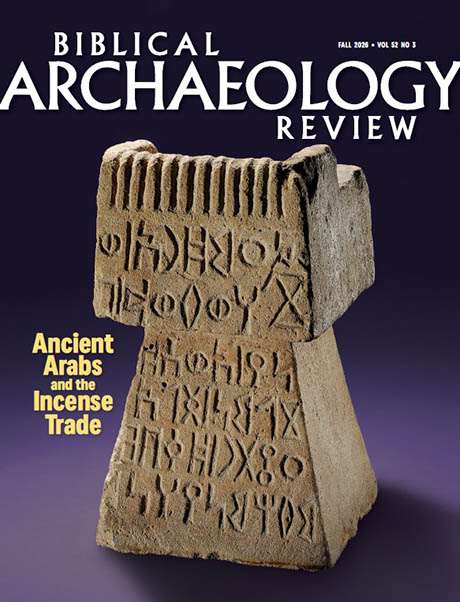
In the heart of the Negev Desert, at a major ancient crossroads, two unassuming structures were used as tombs during the first millennium BCE. Several dozen burials were discovered along with a variety of intriguing grave goods. In addition to providing a rare glimpse into the lucrative Arabian trade, these tombs also shed light on the movement of goods and people over long distances and even raise the possibility that some individuals were trafficked.
In ancient Hebrew manuscripts, such as the Dead Sea Scrolls, one encounters a minimal presentation consisting only of the 22 Hebrew letters, with no additional markings to aid the reading. But one element does appear in these manuscripts even in antiquity: gaps within the text to indicate paragraph breaks. These white spaces carried important information about how a text was meant to be read.