
Biblical Archaeology Review, Spring 2026
Features
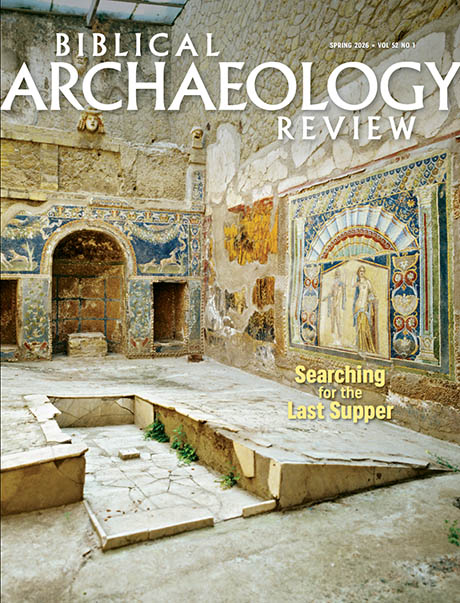
For centuries, traditional interpretations of the Last Supper tended to set the story in an elite Roman dining room, where participants would recline on benches while eating from individual place settings. But in everyday Judean contexts, dining in the time of Jesus looked very different, with common dishes shared by all in attendance. Enter the setting of Jesus’s last meal and explore how this famous repast likely took place.
Synagogues became vital centers of Jewish religious and community life after the destruction of the Temple in 70 CE. Written and archaeological sources provide vivid testimony of how these structures were built, decorated, and sustained across the Mediterranean world of late antiquity. What was it like to worship inside these spaces? Explore how early Jews experienced the sights and smells of ancient synagogues.
The Jewish uprising that occurred across the eastern Mediterranean from 115 to 117 CE was violently suppressed by the Romans, resulting in the deaths of hundreds of thousands. Yet, unlike the better-known First Jewish Revolt and the later Bar-Kokhba Revolt, this uprising is poorly documented in written sources. Explore what recent archaeological discoveries reveal about the Diaspora Revolt on the island of Cyprus.
The fall of Jerusalem and the destruction of the Second Temple in AD 70 were pivotal events in biblical history. But while archaeology has revealed abundant evidence of Jerusalem’s destruction, little has been found of the siegeworks the Romans built to capture the city. Examine the historical and archaeological clues that reveal how the Romans brought the city to heel.