
Biblical Archaeology Review, Summer 2026
Features
Under Roman and Byzantine rule, ancient Syria became the first predominantly Christian province in the Middle East. Between the fourth and seventh centuries, many of the region’s Christian communities shared in a distinctive religious, literary, and architectural culture. Now abandoned and dubbed the “Dead Cities,” copious stone-built towns and villages on the Aleppo Plateau in northwest Syria bear witness to that glorious past.
Situated on a high ridge with a commanding view of the Dead Sea, the Jordanian site of Khirbat Ataruz (biblical Ataroth) was a prominent sacred center during the time of the Israelite and Moabite kingdoms. Join archaeologists as they uncover this remarkable Iron Age temple complex, including traces of its sacred cult and a tantalizing inscription that may hint at a dramatic battle between Israel and Moab that was remembered in the Hebrew Bible.
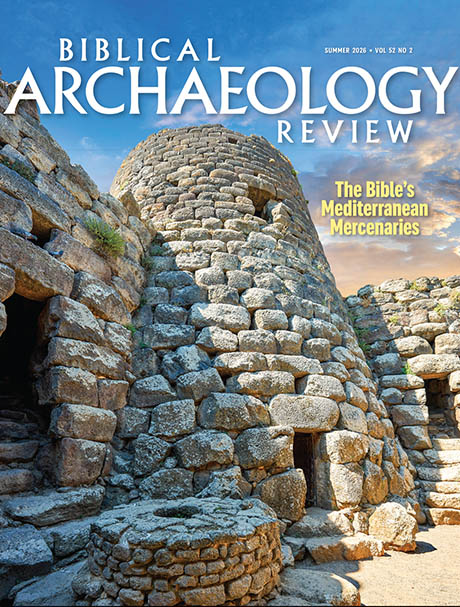
For thousands of years, mercenaries routinely fought in the armies of competing powers and kingdoms across the ancient Mediterranean world. Even the biblical David sold his sword to the Philistines before becoming king of Israel. Explore the Shardanu, some of the best-known warriors of the Bronze Age, and what archaeology reveals about the critical role such mercenaries played in shaping the fates of civilizations.
Whether imagined as the future sanctuary of the people of Israel or as a grand sacred domain in the eschatological world to come, the Jerusalem Temple captivated authors in the biblical and postbiblical periods alike. But the specific details of its form and construction were not settled. In the Dead Sea Scrolls, we encounter two unique, detailed models for how the future Temple should be built.